More Time to Teach
How teachers use Knowt's AI to take on prep, enhance instruction and make more time for what matters most — teaching
A look at twelve months of Knowt data, 1 September 2025 to 31 August 2026, to see how teachers use AI in their work.

For educators, the work starts long before students arrive. On Knowt, teachers use AI to take on much of that prep while staying in charge of it. They upload their own readings and slides, use AI to build notes, practice tests, flashcards and more, and revise what it produces. What they build with AI reaches more than 140,000 students. The result is more time for teaching.
At a glance
About 14,700 teachers built resources with AI, most often study materials.
Teachers also built nearly 15,000 lesson plans, presentations and other resources with Knowt's AI teacher tools.
About 144,000 students studied resources their teachers built with AI.
Teachers turn their uploads into study resources
Teachers use AI most to make something students can study from. A teacher uploads a reading, a slide deck or their own notes, and uses Knowt's AI summarizer to turn it into a note. From there, they can add a flashcard set, a practice test, an interactive game or a podcast in one click.
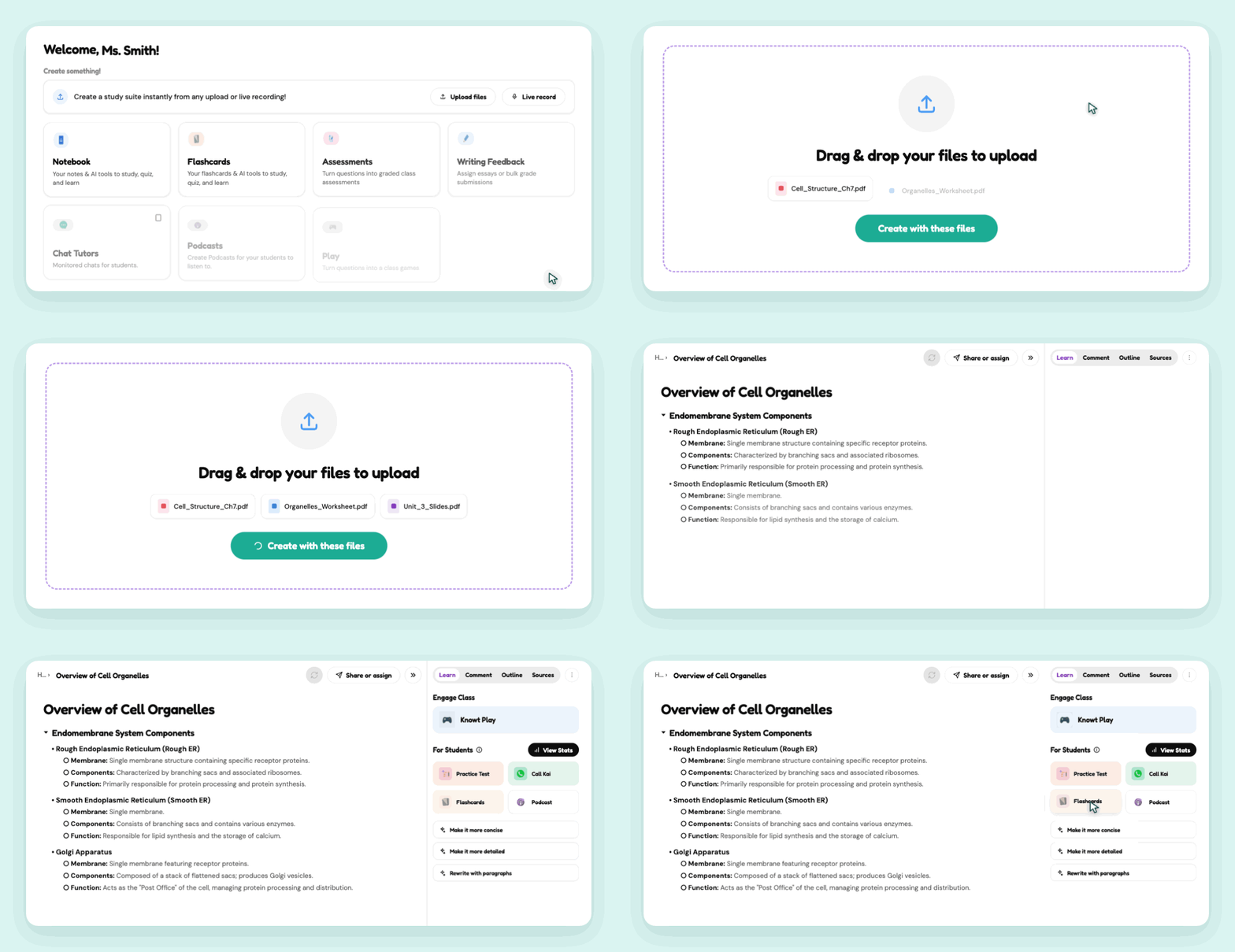
Figure 1. A teacher turns their uploads or a live recording into a study suite of notes, flashcards, practice tests, games and podcasts.
About 14,700 teachers made at least one item with AI during the 2025–26 school year. Teachers built most of their notes (62%) and practice tests (68%) with AI, and at least 39% of their flashcard sets.
Teachers also revised what they built, editing about a quarter of AI-generated notes after creating them. They set the starting point with their own materials, used AI to build from it and shaped the result where they saw fit.
Teachers use AI to plan and enhance instruction
Teachers use AI beyond creating study materials for students. They also use it to plan lessons, build presentations and design classroom activities such as ice breakers and review games. Knowt offers 39 AI tools built for this work.
About 5,500 teachers used these tools over the same year, building nearly 15,000 resources. They used them most to make lesson plans, podcasts, presentations and ice breakers.
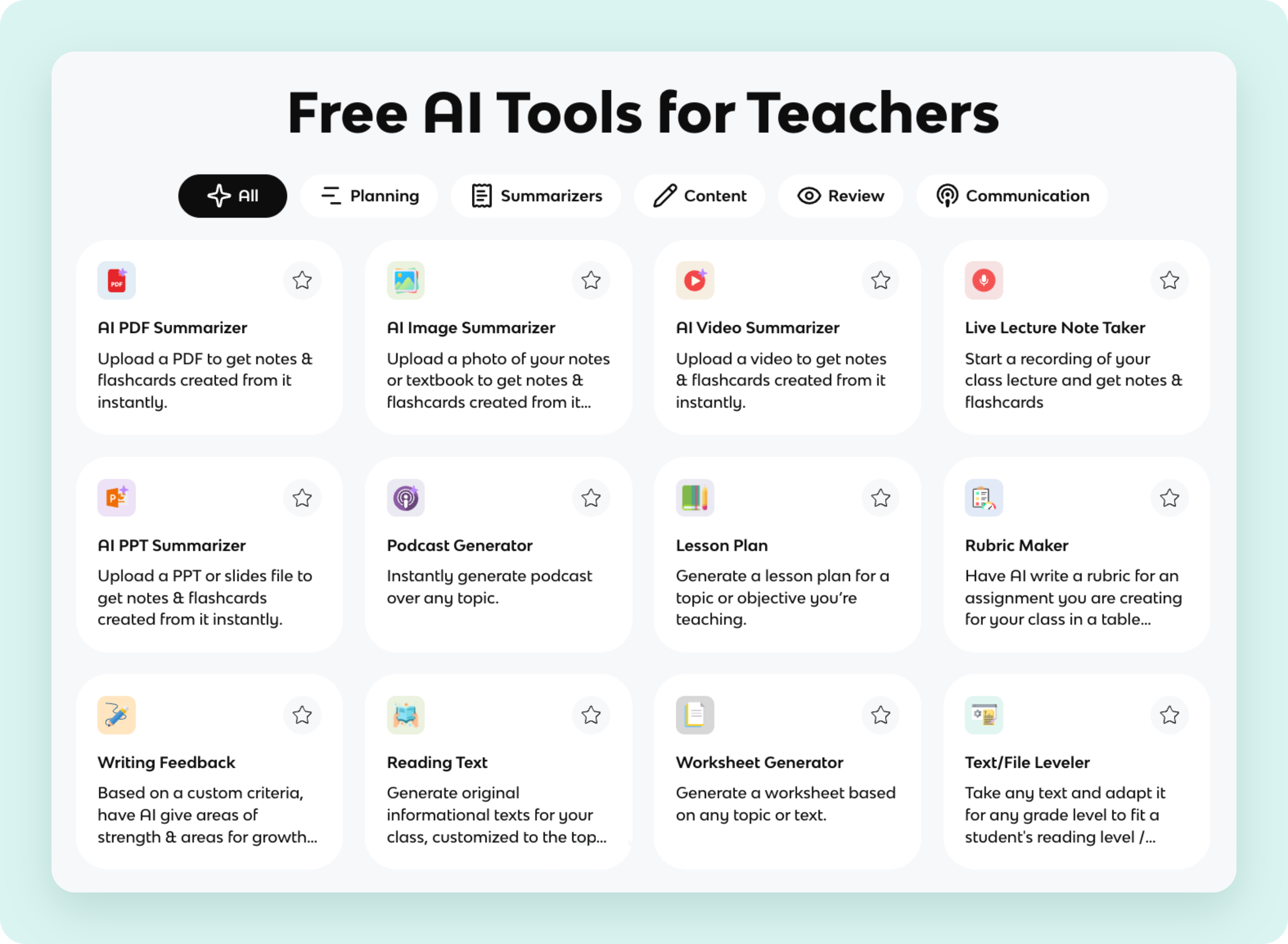
Figure 2. Knowt's AI teacher tools cover planning, content creation, review and communication.
Planning and presenting are work teachers would otherwise build from scratch. With these tools, teachers decide what each lesson needs and shape an AI draft into their own instruction.
What teachers build reaches their students
The resources teachers built with AI reached about 144,000 students. Teachers used AI to create 41% of the new resources their students studied. Practice tests stood out, with teachers using AI to make about 86% of the original tests their students took.
Teachers build with AI, their students study what they build, and there's more time for the teaching itself.
What it means for schools
Teachers on Knowt use AI to take on prep, with their own judgment steering it. About 14,700 teachers built study resources with AI, including most of their notes and practice tests, and revised the drafts where they saw fit. They also used Knowt's teacher tools to plan and enhance instruction, from lesson plans to classroom activities. What they made reached about 144,000 students. Teachers across the country say that help adds up. In a national Gallup survey, those who use AI weekly report saving about six hours a week, roughly six weeks over a school year, time they can put back into teaching.
That time doesn't come at the cost of control. When schools bring in AI, the question that matters most is who stays in charge of the work. On Knowt, it's teachers. They start from their own materials, decide what to build and shape what AI drafts before it reaches students.
To learn how Knowt can support your teachers, their instruction and their students, reach out to our partnerships team at schools@knowt.com.
Methods
Teachers and time period. Teacher accounts that made at least one flashcard set, note or practice test during the 2025–26 school year (1 September 2025 to 31 August 2026), about 44,400 in all. Teachers who only copied or imported material still count.
Where the numbers come from. Knowt's database. There are too many accounts to check one by one, so we checked a random 1 in 20 active teachers (2,201 of about 44,400) and multiplied the results by 20, the same way a poll works. Student figures come from a random sample of 4,000 students. Every figure is a rounded estimate.
What counts as made with AI. Anything a teacher made from an upload, the AI summarizer, a teacher tool or an AI prompt. Copies, imports, deleted items and unpublished drafts don't count, except that the teacher tool count includes finished items teachers never published. "New resources" are ones made during the school year, while the practice test figure includes tests from any year.
Limitations and future research
Minimums. Some activity isn't recorded, like studying while logged out or playing Knowt Play games, so student counts are on the low side. The share of flashcard sets made with AI is also a minimum, because sets made with the Chrome extension were left out.
Time saved. We can see what teachers made with AI, but not how long it would have taken by hand.
Cause and effect. These figures show what teachers did on Knowt. They can't separate Knowt's effect from other changes in teachers' work.
What we'd like to study next. How much time teachers save with AI, and what they do with it, whether that's more one-on-one time with students, small-group instruction or something else.
Sources
Gallup and Walton Family Foundation, Six Weeks a Year: How AI Gives Teachers Time Back (June 2025)
Knowt is an all-in-one learning platform, trusted by more than 5 million students and teachers, that partners with districts to support teachers and help students take ownership of their learning. Questions about this study or about partnering with Knowt? Contact schools@knowt.com.
See how Knowt fits your classroom
Flashcards, notes, practice tests and spaced repetition, with AI on top.

