HOSA BMET Complete
 Call Kai
 Learn
 Practice Test
 Spaced Repetition
 Match
 Flashcards
 Knowt Play
1/638

There's no tags or description
Looks like no tags are added yet.
639 Terms
Pathophysiology
Study of how disease or abnormal conditions alter normal body function.
Metabolism
All chemical reactions occurring within an organism or cell.
Protein synthesis
Production of proteins using genetic instructions.
Diffusion
Net movement of substances from higher concentration toward lower concentration.
Osmosis
Movement of water across a selectively permeable membrane due to differences in water concentration.
Active transport
Transport that uses energy to move substances, often against a concentration gradient.
Endocytosis
Cellular uptake of substances using membrane-associated vesicles.
Exocytosis
Release of substances when vesicles fuse with the cell membrane.
Leukocyte
White blood cell; contributes to immune defense.
Adipocyte
Fat cell involved in energy storage, insulation, and signaling.
Pancreatic alpha cell
Cell that secretes glucagon.
Pancreatic beta cell
Cell that secretes insulin.
Pancreatic delta cell
Cell that secretes somatostatin.
Pancreatic PP cell
Cell that secretes pancreatic polypeptide.
Insulin
Hormone that generally lowers blood glucose by promoting uptake and storage.
Glucagon
Hormone that generally raises blood glucose by promoting glucose availability.
Epithelial tissue
Tissue that covers surfaces, lines cavities, and performs protection, absorption, secretion, or related functions.
Connective tissue
Tissue that supports, binds, protects, insulates, or transports.
Hematopoiesis
Formation of blood cells, primarily in bone marrow.
Anterior
Toward the front of the body.
Posterior
Toward the back of the body.
Superior
Toward the head or above another structure.
Inferior
Toward the feet or below another structure.
Superficial
Closer to the body surface.
Deep
Farther from the body surface.
Normal blood-flow route through the heart
Body → venae cavae → right atrium → right ventricle → pulmonary arteries → lungs → pulmonary veins → left atrium → left ventricle → aorta → body.
Systole
Contraction phase of the cardiac cycle, particularly ventricular contraction.
Diastole
Relaxation and filling phase of the cardiac cycle.
SA node
Sinoatrial node; the heart's primary normal pacemaker.
AV node
Atrioventricular node; conducts electrical activity from atria toward ventricles and contributes to conduction delay.
Bundle of His
Conduction pathway carrying electrical activity from the AV node into the ventricular conduction system.
Purkinje fibers
Specialized fibers that distribute electrical activation through ventricular tissue.
Depolarization
Electrical activation of excitable tissue.
Repolarization
Electrical recovery toward the resting electrical state.
ECG / EKG
Recording of electrical activity associated with the heart.
P wave
ECG representation primarily associated with atrial depolarization.
QRS complex
ECG representation primarily associated with ventricular depolarization.
T wave
ECG representation primarily associated with ventricular repolarization.
ECG electrodes
Contact points that detect electrical signals from the body.
ECG lead
View of cardiac electrical activity derived from electrode connections and a defined measurement configuration.
Artifact
Signal distortion or interference that is not the intended physiological signal.
Upper respiratory structures include
Structures such as the nose, nasal cavity, pharynx, and related passages that condition and conduct air.
Trachea
Airway that conducts air toward the bronchi.

Bronchi
Airways that branch from the trachea into the lungs.

Bronchioles
Smaller airway branches within the lungs.
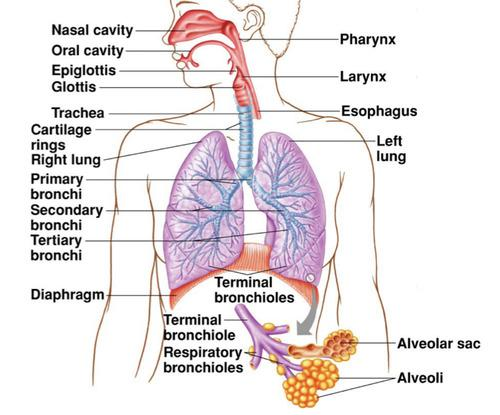
Alveoli
Small air sacs where gas exchange primarily occurs.

Gas exchange
Movement of oxygen and carbon dioxide between air, blood, and tissues.
Perfusion
Blood flow through tissues or capillaries.
Hypoxemia
Low oxygen level in arterial blood.
Hypoxia
Insufficient oxygen availability at the tissue level.
Hypercapnia
Elevated carbon dioxide in the blood.
Tidal volume
Volume of air moved during a breath.
Respiratory rate
Number of breaths per unit of time, commonly breaths per minute.
FiO2
Fraction or concentration of inspired oxygen.
Sympathetic nervous system
Autonomic division associated with mobilizing responses, often described as fight-or-flight.
Parasympathetic nervous system
Autonomic division associated with restorative functions, often described as rest-and-digest.
Neurostimulator
Device that delivers controlled stimulation to targeted nervous-system structures for a therapeutic purpose.
Peristalsis
Coordinated muscular contractions that move contents through the digestive tract.
Pancreas
Organ with endocrine functions and exocrine digestive functions.
Renal / urinary system purpose
Filter blood, regulate fluid and electrolytes, manage waste, and contribute to homeostasis.
Kidney
Organ that filters blood and helps regulate fluid, electrolyte, and waste balance.
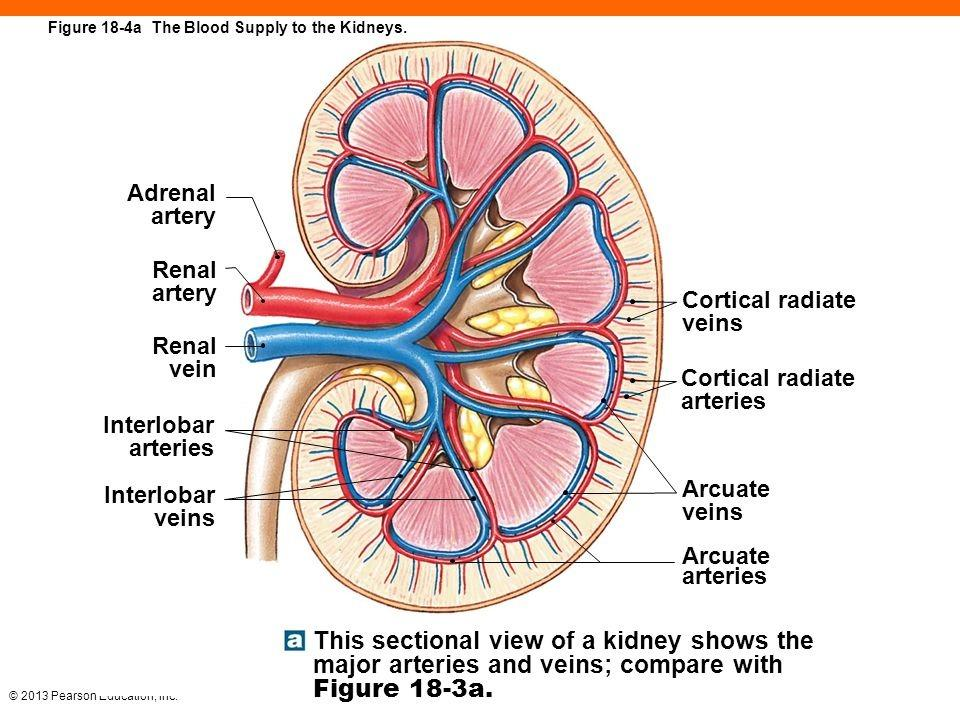
Nephron
Functional unit of the kidney.
Glomerulus
Capillary network involved in filtration within the nephron.

Filtration
Movement of fluid and substances from blood into the kidney's filtering system.
Reabsorption
Movement of substances from tubular fluid back into the bloodstream.
Secretion in the nephron
Movement of substances from blood or surrounding tissue into tubular fluid.

Endocrine system
System that regulates body functions through hormones.
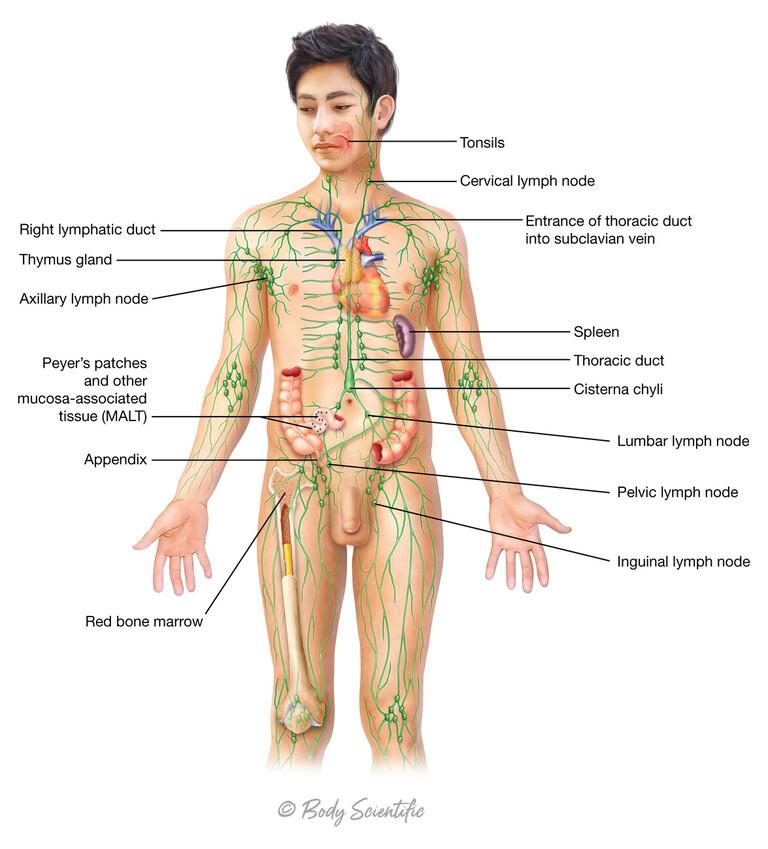
Lymphatic system
System that returns tissue fluid to circulation and supports immune functions.
Lymph
Fluid transported through the lymphatic system.
Lymph nodes
Structures that filter lymph and provide sites for immune activity.
Innate immunity
Broad, rapid immune defense that is not based on the same antigen-specific memory as adaptive immunity.
Adaptive immunity
Specific immune defense involving specialized lymphocytes and immune memory.
Homeostasis example
Several systems coordinate to maintain stable conditions, such as temperature, blood pressure, and blood chemistry.
Pulse oximetry physiological basis
Uses light absorption characteristics of pulsatile blood to estimate peripheral oxygen saturation and pulse rate.
ECG physiological basis
Detects electrical potentials associated with cardiac activity through electrodes.
NIBP physiological basis
Estimates blood pressure noninvasively using a cuff and a measurement method such as oscillometry.
Ventilator physiological purpose
Supports or controls ventilation by delivering gas according to prescribed settings and the device's mode.
Dialysis physiological purpose
Supports removal of waste products and excess fluid and helps manage aspects of blood chemistry.
HTM responsibilities
Healthcare Technology Management; management of medical technology and systems to support safe, effective healthcare.
BMET
Biomedical Equipment Technician who maintains, tests, repairs, inspects, and supports medical equipment.
HTM department responsibilities
(Healthcare Technology Management) Healthcare organization department responsible for managing and supporting medical technology.
Clinical engineer responsibilities
Professional who applies engineering knowledge to healthcare technology, systems, and clinical environments.
OEM
Original Equipment Manufacturer; company that originally manufactures a device or product.
ISO in BMET employment context
Independent Service Organization; a third-party service provider. Note that ISO also refers to the International Organization for Standardization in standards contexts.
BMET core purpose
Help ensure medical equipment functions safely, accurately, and reliably.
BMET responsibilities
Inspection, preventive maintenance, corrective maintenance, testing, calibration when applicable, inventory, documentation, installation, recalls, and support.
BMET Level 1 ,2,3
Entry or foundational technician level, with scope and responsibilities defined by employer and training.
Technician level with broader experience and responsibility than entry-level roles, as defined by the organization.
More advanced technician level, often handling greater complexity or specialized responsibilities as defined by the organization.
BMET specialist
Technician or professional with focused expertise in a particular equipment or technology area.
Common BMET employers
Hospitals or healthcare organizations, independent service organizations, OEMs, military and other service environments.
MEMP and what they cover
Medical Equipment Management Plan; organizational plan for managing medical equipment.
Equipment acquisition, selection, inventory, maintenance, training, documentation, recalls, incidents, risk, and policies.
Why inventory matters
A complete, accurate equipment inventory supports oversight, maintenance planning, safety, accountability, and regulatory compliance.
Medical equipment lifecycle
Acquisition → incoming inspection → inventory and installation → use → maintenance and repair → retirement or disposition.
Incoming inspection
Initial review and appropriate testing of newly received equipment before it is placed into service.
Incoming inspection components
Appropriate electrical-safety, operational, and functional checks, documentation, and inventory entry according to policy.
Operational check
Evaluation that equipment operates as expected in the relevant operating context.
Functional check
Evaluation of specific functions or features against appropriate expectations.
Electrical safety check
Evaluation of electrical safety parameters using appropriate methods and standards.
CMMS documentation after inspection
Record equipment identification, inspection and test results, maintenance actions, and status as required.
Preventive maintenance (PM)
Planned maintenance intended to maintain equipment safety, performance, and reliability and reduce risk of failure.
Corrective maintenance
Maintenance intended to correct an identified malfunction or deficiency.