(5) Netherlands: Notable Explorers and Merchants and Colonizers and Colonial Administrators
 Call Kai
 Learn
 Practice Test
 Spaced Repetition
 Match
 Flashcards
 Knowt Play
1/18

There's no tags or description
Looks like no tags are added yet.
19 Terms
1500s - 1597 - Cornelius Wytfliet (All Facts)
Dutch Geographer
He is best known for having produced the first atlas of the Americas
He (nearly correctly) estimated (just before his death) that the undiscovered continent that was Australia covered a fifth of the world’s entire surface
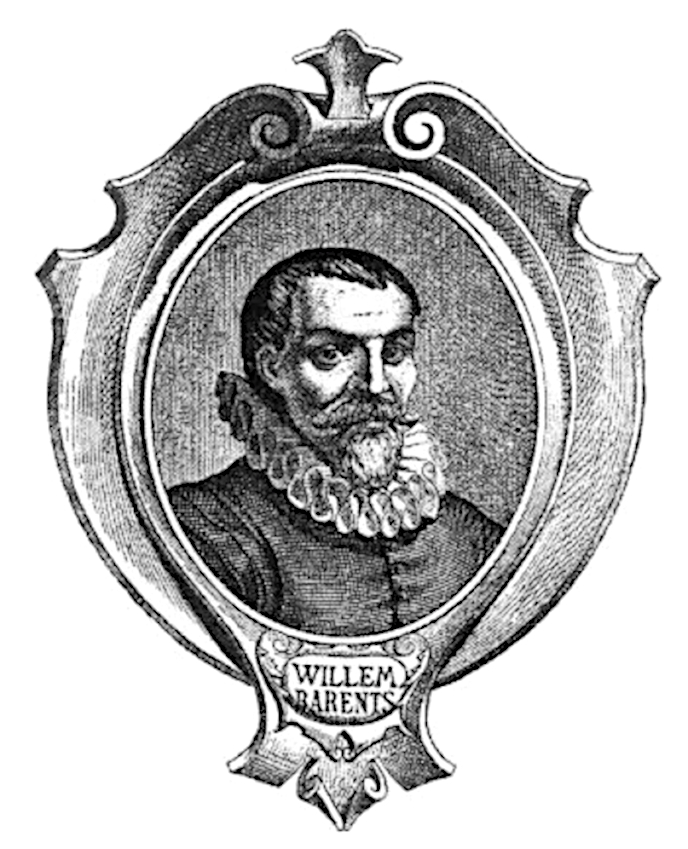
1550 - 1597 - Willem Barentsz (All Facts)
Dutch Explorer, Navigator, and Cartographer
On his third voyage to China to search for a northeast passage,
He discovered Spitzbergen and Bear Island before his ship was trapped in ice-floes, forcing him and his men to spend the winter in the Arctic
Gerrit de Veer, the historian of his expedition, wrote a moving description of the men’s ordeal by cold and hunger
When it was clear that they were trapped, they built a house from tree-roots
He wrote about this that “it froze so hard, that as we put a nail in our mouths, there would be ice thereon when we took it out again and make the blood follow”
They were attacked by polar bears and forced to eat foxes as their supplies ran out
They were nearly suffocated by smoke when snow covered their hut
He died while on his voyage to China around the north of Russia in the Arctic to search for a northeast passage
The course took him in a more northerly direction than hitherto
Despite his death and the intense cold, there were 16 survivors of the expedition, who managed to celebrate the Feast of the Epiphany
Gerrit de Veer was one of them, and he wrote that, “for several days we had not drunk and so that night we made merry and drunk to the three kings, and therewith had two pounds of meal whereof we made pancake with oil and every man a white biscuit which we soaked in wine”
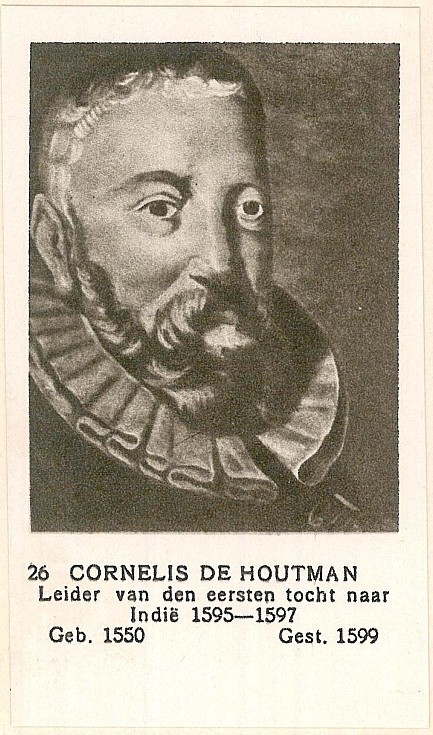
1565 - 1599 - Cornelius van Houtman (All Facts)
Dutch Merchant
He was from Holland but lived for a long time in Lisbon
He commanded the first Dutch expedition to the East Indies
This was a two-year voyage to the Far East Spice Islands
This voyage left the Portuguese fearful for it threatened their monopoly of the Eastern spice trade
He sailed from Holland with four ships
He was helped on his voyage by the book “Itinerio” by Jan Huyghen van Linschoten, a fellow Dutchman
They sailed around the Cape of Good Hope
He dropped anchor at Bantam in Java after a year, where the local Portuguese made him welcome
However, the Portuguese became hostile when they realized what he and the Dutch were doing there
Nevertheless, he outwitted the Portuguese and persuaded the sultan of Bantam to sign a treaty which helped him depart with a cargo of spices
His return voyage home was marked by losses of ships and men, but his tailes of rich trading opportunities fired up Amsterdam’s merchants with enthusiasm
He was a prosperous carrier of pepper, nutmeg, and other spices from Lisbon to countries of northern Europe
However, this came to an abrupt end when King Philip II of Spain annexed Portugal and unified the Iberian Peninsula he barred the Dutch from trading with the Portuguese because of their rebellion against his rule in the Netherlands
He therefore resolved to get into the eastern trade on his own account like many other Dutchmen of his day
His voyages thus helped in the planning by the Dutch to found trading companies, described as “Van Ferne” (of the distant seas)
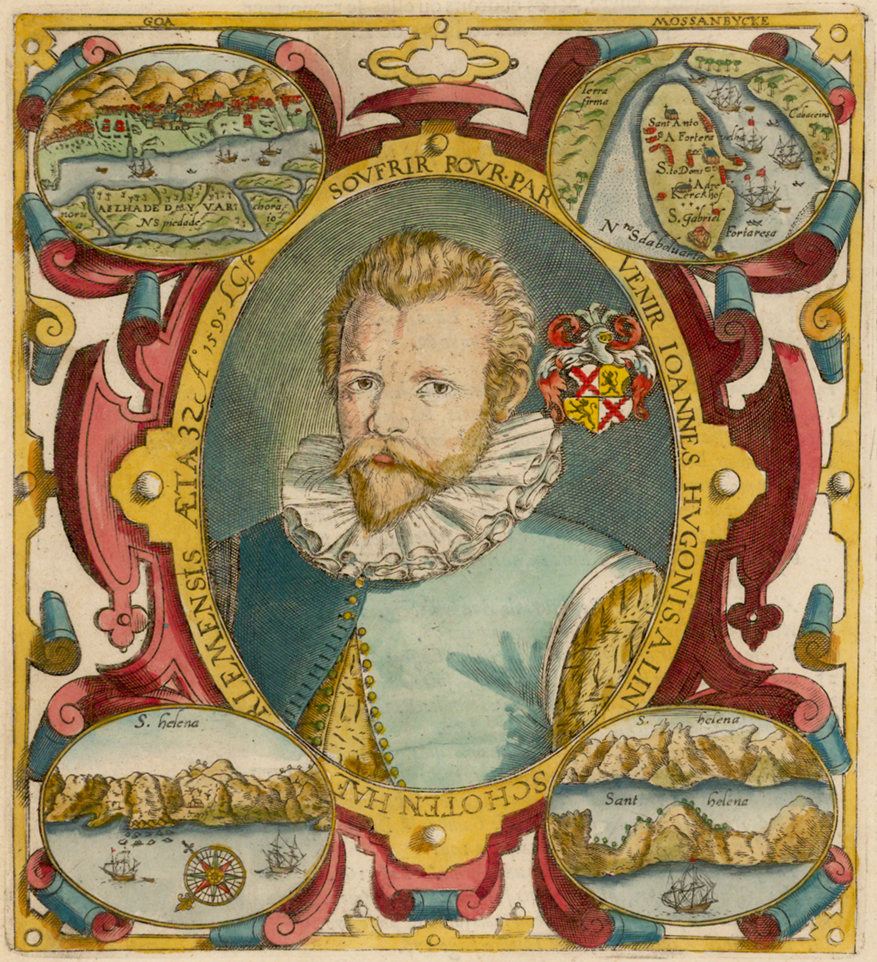
1563 - 1611 - Jan Huyghen van Linschoten (All Facts)
Dutch Merchant and Writer
His book “Itinerio” helped Cornelius van Houtman on his expedition to the East Indies
1566 - 1615 - Wybrand van Warwijck (All Facts)
Dutch Admiral during the reign of Maurice of Nassau
He took possession of an island which he called “Mauritius” in honor of (“Stadtholder”) Maurice of Nassau

1568 - 1615 - Pieter Both (All Facts)
First Dutch Governor of the East Indies
He advised Dutchmen in the East Indies colonies to marry “heathen” women as respectable Dutch women were not allowed to emigrate to tropical countries such as those in the East Indies
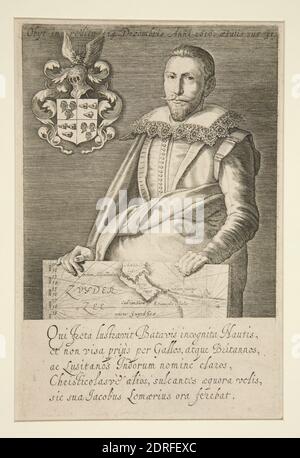
1585 - 1616 - Jacob Le Maire (All Facts)
Dutch Explorer, Navigator, and Mariner
He circumnavigated the Earth
He discovered a new route to the Pacific Ocean for Europeans, round a cape south of the Straits of Magellan which he named Cape Horn
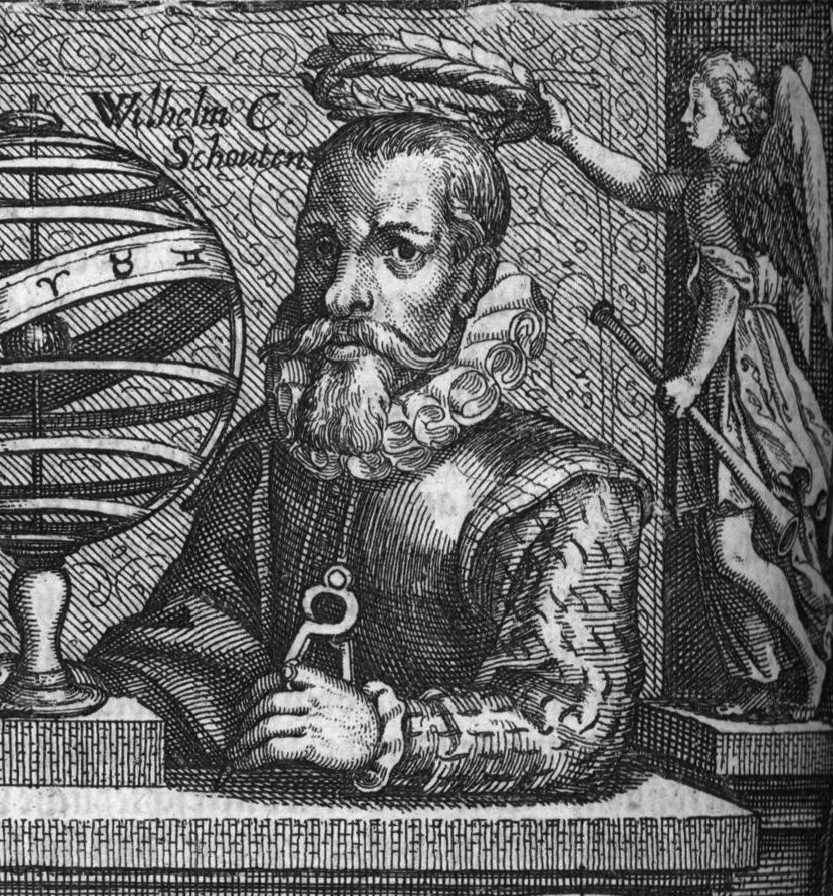
1567 - 1625 - Willem Schouten (All Facts)
Dutch Explorer and Navigator for the Dutch East India Company
He discovered a new route to the Pacific Ocean for Europeans, round a cape south of the Straits of Magellan which he named Cape Horn
1567 - 1627 - Adriaen Block (All Facts)
Dutch Private Trader and Privateer
He returned from North America to Amsterdam after a voyage, with maps of the coastline of Manhattan (New York)

1577 - 1629 - Piet Pieterszoon Hein (All Facts)
Dutch Admiral and Privateer
He commanded a potent fleet formed to carry the Dutch Revolt / Eighty Years' War across the Atlantic to colonies and shipping in the New World of the Americas
He was raised as a galley slave of Spain
He served the Dutch Republic during the Dutch Revolt / Eighty Years War
He seized Spain’s bullion cargo of 80 tons of silver and other treasures, worth 12M Dutch guilders
He picked up a straggler from a Spanish treasure fleet off Havana in (Spanish) Cuba, which gave him the intelligence he sought about its movements
He then stalked the Spaniards who fled into a bay and ran ground on a mud bank, where the crews rowed ashore
He moored nearby and crossed in his own cutter to take possession of his prize, without a single shot or any causality
He was also able to direct Spanish prisoners to the nearest plantations, where he had once been held prisoner by them
He treated his captives with compassion
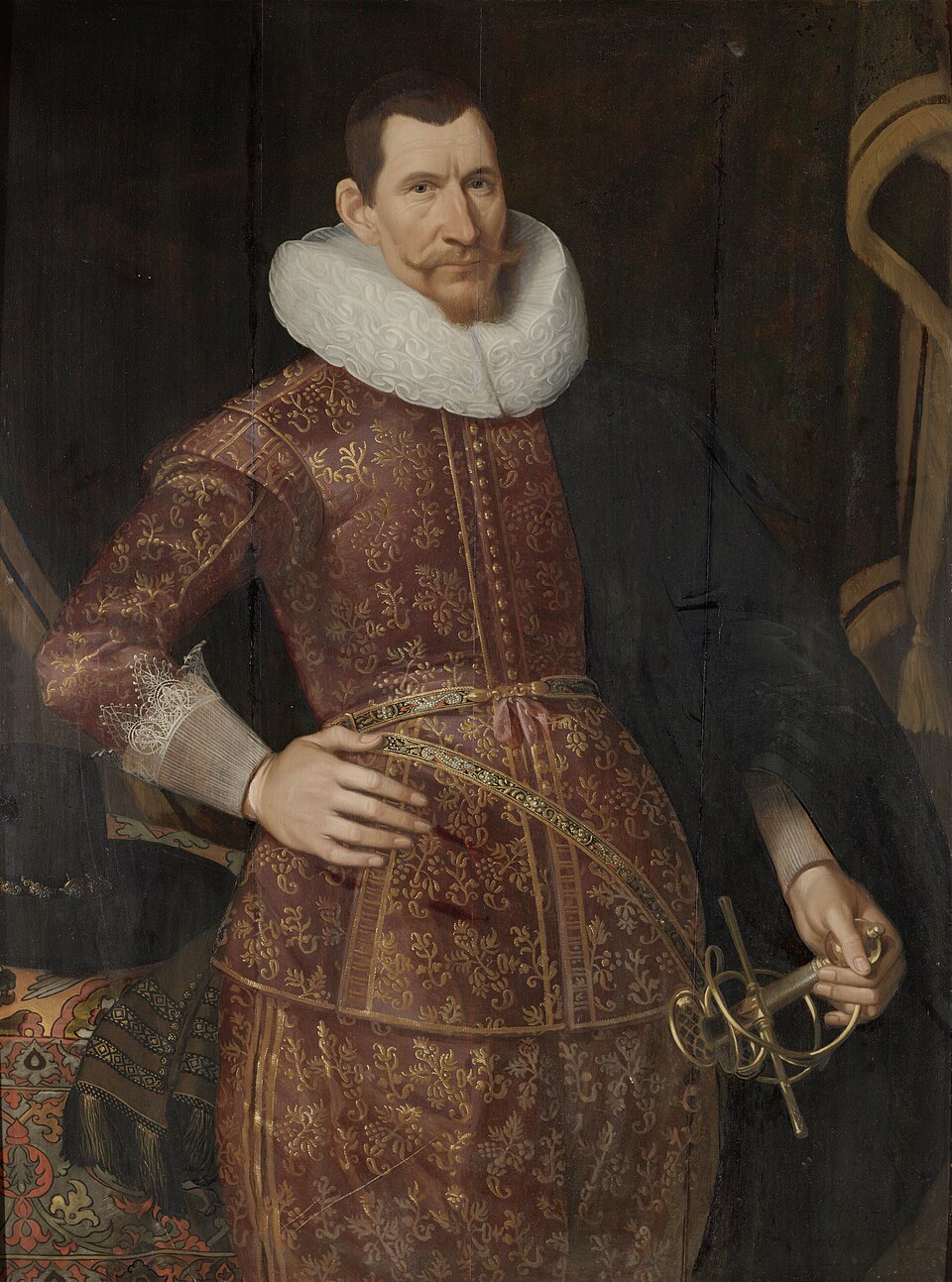
1587 - 1629 - Jan Pieterszoon Coen (All Facts)
Dutch Naval Officer of the Dutch East India Company
He acquired a reputation for unbridled ruthlessness after he founded the Dutch colony of Batavia and razed its old Muslim town to the ground and drove out the rest whom he did not massacre
He supported the Amboina Massacre
1595 - 1630 - Francisco Pelsaert (All Facts)
Dutch Merchant
He landed on northwestern Australia after his ship, the Batavia, was wrecked on Morning Reef

1637 - 1643 - John Maurice of Nassau (All Facts)
Dutch Colonial Administrator and Governor of (Dutch) Brazil
During his reign, he oversaw a multi-racial and multi-cultural colony of
Dutch Protestants
English Protestants
Portuguese Catholics
Jews
Mulattos
Black Slaves
When he ended his reign and returned to Holland in the Netherlands, the Portuguese planters there rebelled against his succeeding administration and the colony went into decline

1636 - 1645 - Antoine van Dienem (All Facts)
Dutch Colonial Governor of the Dutch East Indies
He was appointed during the reign of Frederick Henry

1638 - 1647 - Willem Kieft (All Facts)
Dutch Colonial Administrator and Director of New Netherland
He ordered the Dutch massacre of the Algonquin natives

1603 - 1659 - Abel Janszoon Tasman (All Facts)
Dutch Explorer and Navigator
He was a captain of the Dutch East India Company
He made many voyages of exploration in the South Sea
His extensive explorations revealed many new territories
He discovered what is now modern-day New Zealand (named after the Dutch province, originally called Staten Landt)
He discovered what is now modern-day Tasmania (named after the namesake, originally called Van Diemen’s Land)
He circumnavigated the “Southland”
He discovered the archipelago of Tonga and reached Fiji and New Guinea
He compiled a map of the north and west coasts of (modern-day) Australia
He was hoping to discover the fabulous Southern Continent, on which the Dutch East India Company hoped to find treasures equal to those of the new world, but he never did

1652 - 1662 - Jan van Riebeeck (All Facts)
Dutch Merchant and Colonial Administrator and Founder and First Governor of the Dutch Cape Colony
He decided to establish it as a half-way point between Europe and the East
He led an expedition of 90 men to the Cape of Good Hope which was backed by the Dutch East India Company
The expedition’s purpose was to build a supply station for mariners making the long five-month voyage from Europe to the East Indies and build a military settlement at Table Bay there
During the expedition, they were surprised when they were met by a couple of local Khoisan herdsmen at Table Bay on the Cape of Good Hope called Harry and Donan who both spoke fluent English
He was motivated to found and maintain the settlement after he learned of the Dutch ship Haarlem which had shipwrecked into the island four years prior and in which the members of the crew survived by growing their own fruits and vegetables and thus avoiding scurvy which had previously accounted for the deaths of many Dutch on their long voyages
He encouraged company employees to set up their own farms, as he was a believer in free enterprise
He sent any Africans who tried to thwart the setting up of these farms to Robben Island
He opened peace negotiations following a 12-month guerilla war between the Khoisan pastoralists and Dutch settlers in the Dutch Cape Colony (Cape of Good Hope), but the compromise did not last and led to the Khoikhoi-Dutch Wars

1647 - 1664 - Peter Stuyvesant (All Facts)
Dutch Colonial Administrator and Governor of New Netherland / New Amsterdam
He prohibited tennis-playing while religious services were being held
1659 - 1729 - Jacob Roggeveen (All Facts)
Dutch Explorer and Navigator
He discovered what is now known as “Easter Island,” which it was called as such since its discovery took place on the holiday
He also discovered the islands’ strange, lonely, and primitive sun worshippers who themselves called the island “Rapa Nui"
He found not just natives, but its having been populated by hundreds of extraordinary statues, long-eared icons up to 32 feet tall