Great Britain: Political History and Notable Figures
 Call Kai
 Learn
 Practice Test
 Spaced Repetition
 Match
 Flashcards
 Knowt Play
1/20

There's no tags or description
Looks like no tags are added yet.
21 Terms

1692 - 1714 - Sophia of Hanover (All Facts)
Electress of Hanover
Her position essentially established the House of Hanover, per the Act of Settlement / Establishment, and the Hanoverian line, to the throne of Great Britain
She was the presumptive heir to the British throne following the death of Queen Anne, however, she died around the same time, so her son George succeeded Queen Anne and took what would have been her rule on the British throne

1707 - 1714 - Anne (All Facts)
Founder and First Queen (Ruler) of Great Britain (England and Scotland, and Ireland) and Final Queen (Ruler) of the House of Stuart
She was from the House of Stuart
She was the younger sister of her predecessor Queen
She was expected to rule much as did her predecessor King
She led Great Britain in the War of the Spanish Succession
During this time, England captured Sardinia and Minorca from France
She signed the Treaty of Utrecht with the other European leaders powers of the time, ending the War of the Spanish Succession
During her reign,
Parliament issued
The Acts of Union
After its passage, she rode in state to St. Paul’s Cathedral for a ceremony of thanksgiving, giving the British people an unexpected holiday to enjoy
Under her reign,
Britain’s South Sea Company was founded
She outlived all 17 of her children and thus died without an heir at Kensington
However, the Treaty of Utrecht and Act of Settlement / Establishment passed earlier in her reign as Queen of England (and Scotland) ensured that the House of Hanover would succeed the House of Stuart
Her first cousin once removed Sophia of Hanover was supposed to succeed her as per the Act of Settlement / Establishment, however she died and so Sophia of Hanover’s son succeeded her instead
She detested the Hanover line, but two days before her death realized that her successor would succeed her, as he was the great-grandson of King James of England and that a Stuart succession would cause political turmoil and be bad for business
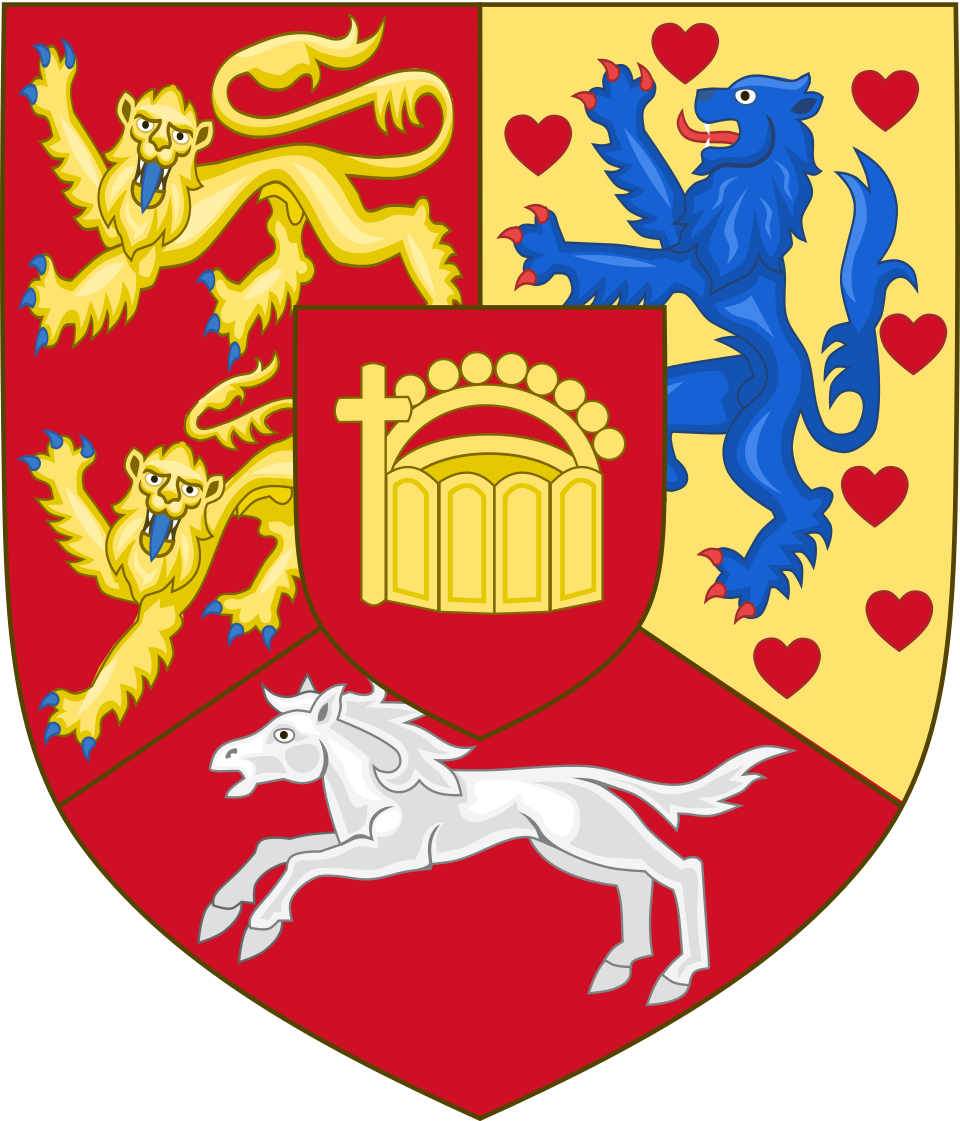
1714 - 1801 / 1901 - House of Hanover (All Facts)

1650 / 1707 - 1722 - John Churchill (All Facts)
He was the First Duke of Marlborough and an army officer
He is considered one of England’s / Britain’s greatest generals
His military triumphs derived from his
attention to detail
care for his fellow soldiers’ welfare
cool head in the heat of battle
He led England / Britain in the War of the Spanish Succession, in which
he and his English forces
seized Gibraltar in and from Spain
along with Scottish forces, Dutch forces, and Prince Eugene of Savoy and his Holy Roman forces defeated French forces and Bavarian forces in the Battle of Blenheim
he and his British forces
along with his Dutch forces and Prince Eugene of Savoy and his Holy Roman and Austrian forces defeated French forces in the Battle of Oudenaarde
along with his Dutch forces and Prince Eugene of Savoy and his Holy Roman and Austrian forces defeated French forces in the Siege of Lille
along with his Dutch forces and Prince Eugene of Savoy and his Holy Roman and Austrian forces defeated French forces in the Battle of Malplaquet

1695 - 1724 - Thomas Guy (All Facts)
English Merchant, Philanthropist, and Book-Seller
He was famous for having founded his namesake hospital in London
His will provided for a vast number of people, both known and unknown to him, as well as leaving sufficient funds for the running of his (new) namesake hospital in London

1661 - 1724 - Robert Harley (All Facts)
English / British Statesman and Founder of the South Sea Company

1714 - 1727 - George (All Facts)
2nd King (Ruler) of Great Britain and Founder and First King of the House of Hanover of Great Britain
He was the first (German) British monarch of the House of Hanover and first German monarch of Britain
He was initially the Elector of Hanover, son of the prior Electress, Sophia of Hanover (of Germany / the Holy Roman Empire)
He brought with him two German mistresses who he made countesses
He was appointed to the British throne by the British Parliament
in order to ensure confirmation of the Act of Settlement / Establishment passed during the reign of his direct predecessor
due to his fervent Protestantism, which helped suppress the Jacobite Movement / Party and remaining supporters of the House of Stuart, and thus prevent the political turmoil and bad business that a claimant of the House of Stuart to the throne would cause
due to his being the great-grandson of King James of England, which gave him (and thus his Hanover line) some legitimacy to the British throne
Despite these conditions, he spoke no English and had a notoriously foul temper which made hardly anyone care for him
Under his reign,
The Treaty of the Hague was signed with the European powers of the Quadruple Alliance, ending the War of the Quadruple Alliance
Britain was anxious to secure supplies of spars and hemp for the British Navy from Sweden, fearful of Russia’s increasing dominance in the Baltic over the course of the Great Northern War
Britain blocked trading activity with Austria by passing a law against trade with the merchant Ostend Company of Austria
Britain and Austria’s commercial differences were resolved upon the Ostend Company’s Flemish merchants being put into liquidation
The Treaty of Charlottenburg was signed with Prussia in order to seek friendship in the face of Holy Roman Emperor Charles VI’s promotion of the Ostend Company
1655 - 1728 - Francis Nicholson (All Facts)
British Army Officer and Colonial Administrator
He led an expedition in which he and his forces captured the French stronghold of Port Royal in Acadia (modern-day Nova Scotia and New Brunswick) during Queen Anne’s War during the War of the Spanish Succession
1656 - 1728 - Hovenden Walker (All Facts)
British Admiral and Naval Officer who led the failed (1711) Quebec Expedition during Queen Anne’s War during the War of the Spanish Succession
He and a few other survived on the one ship that survived the storm that occurred during the abortive expedition

1671 - 1729 - John Law (All Facts)
Scottish-French Financier and Economist
He was a Scottish exile who gained the confidence of Philippe II of France
He created a novel financial scheme for French and British public finances known as his namesake system centered by his namesake bank and namesake trading company, ending in the devastating boom and bust known as the "Mississippi Bubble” / “South Sea Bubble”
He launched his
namesake bank, which issued notes
namesake trading company (the Compagnie des Indies)
He was allowed to collect some land taxes
When angry Parisians besieged his namesake bank in protest of the bubble he caused, he fled

1698 - 1731 - Philip Wharton (All Facts)
Duke of Wharton
He was a (Catholic) Jacobite Writer and Journalist who presided over the first masonic lodge in Spain in Madrid, which was only attended by Englishmen
He was a Roman Catholic agent of the Pretender, James Francis Edward Stuart

1675 - 1732 - John Erskine (All Facts)
Earl of Mar and Scottish Politician and Aristocrat
He was nicknamed “Bobbing John” because of his characteristic political vacillation
He organized a Jacobite Rebellion which attempted to put James Francis Edward Stuart on the British throne
1695 - 1736 - John Porteus (All Facts)
Scottish Military Officer who served in the Edinburgh City Guard
He was held responsible for the shooting of several innocent civilians in a riot which broke out following the execution of a popular smuggler called Andrew Wilson
As a result, he himself was executed by hanging by a mob in another riot

1727 - 1737 - Caroline of Brandenburg-Ansbach (All Facts)
3rd Queen of Britain and 2nd Queen from the House of Hanover and Wife of King George II
She was said to hold real power behind the throne of her husband according to coffee house gossip of Britain at the time
She was cultured and determined
She liked to get away from her husband and spend time talking politics with Robert Walpole
She once intervened to stop her husband from sacking Robert Walpole during the funeral of her husband’s predecessor

1730s - 1740s - Robert Jenkins (All Facts)
Welsh Explorer and “Master Mariner” and Commander of his smuggling brig, the “Rebecca”
During one voyage, he was sailing past Havana, Cuba and eventually sailed from (British) Jamaica with sugar and other commodities for London (Britain), when he was intercepted by coast guards from Spain
The Spanish demanded heavy duties on the cargo of the namesake’s brig “Rebecca,” but the namesake refused to pay
The Spanish then tortured the namesake and his crew, repeatedly demanding for the money
The Spanish then cut off the namesake’s ear with a cutlass when he continued to refuse to pay, handed it to him, and told him to give to his king
He then returned to Britain, where he sought the advice of Prime Minister Robert Walpole
This incident would serve as the casus belli for the War over the namesake’s ear, which would directly coincide with the War of the Austrian Succession
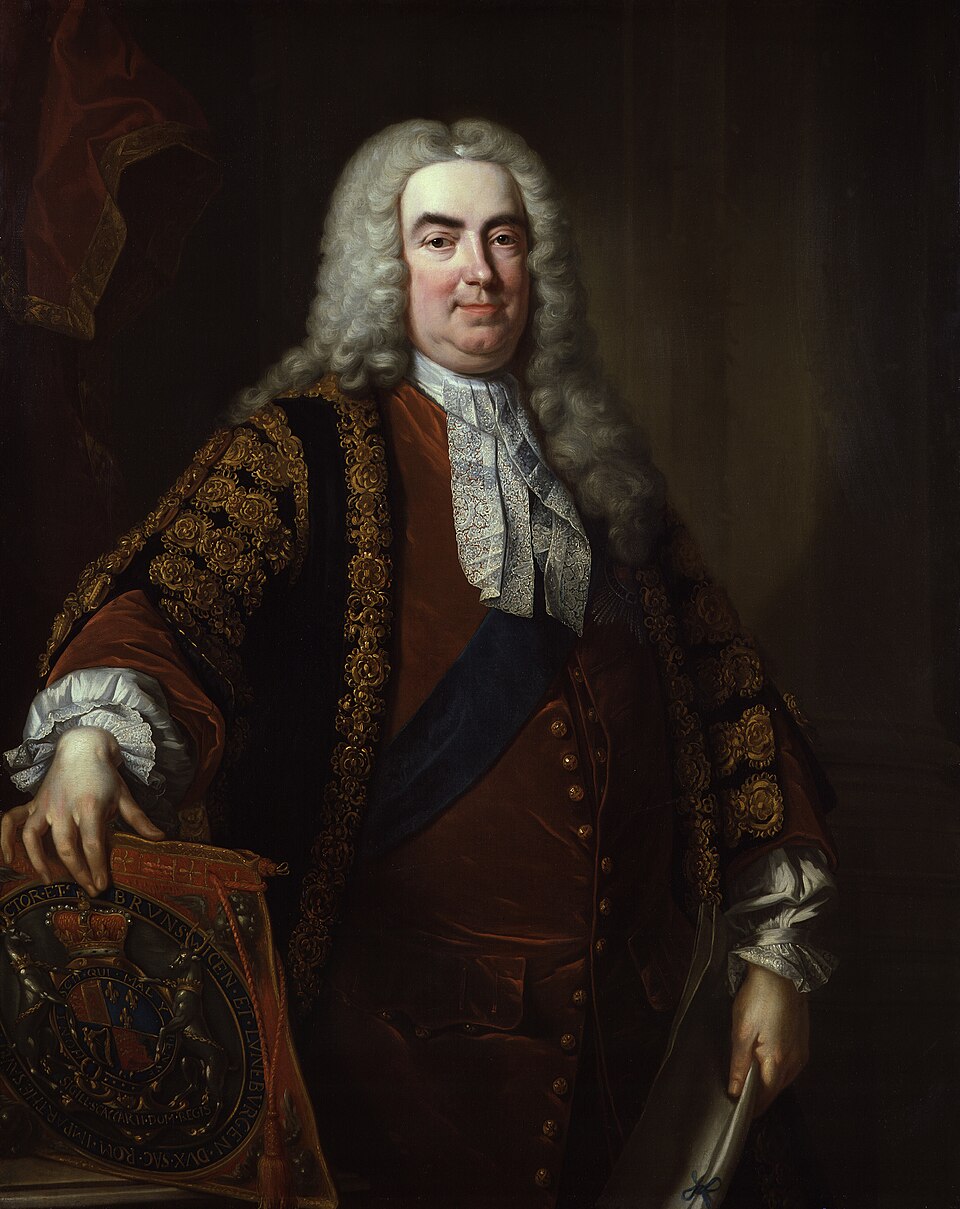
1721 - 1742 - Robert Walpole (All Facts)
Founder and First Prime Minister of Great Britain
He was an ambitious Whig politician
He was made the Chancellor of the Exchequer
He was granted the position following the collapse of the “South Sea Scheme” in England that created the “South Sea Bubble,” in the hope that he would restore financial order to Great Britain
He became the sole minister of the British cabinet following the resignation of Lord Townshend
During his reign,
He suffered an election setback as a result of opposition to his foreign policy by the self-styled “Patriot Whigs”
Under his reign,
Parliament issued
a law which prohibited the export of American hats to Britain, which was designed to protect British hat-makers (it was an example of mercantilism)
He resigned and was replaced

1727 - 1760 - George II (All Facts)
3rd King (Ruler) of Great Britain and 2nd King of the House of Hanover
His reign was marked by the power of his wife Caroline, his cultured and determined Queen and Wife
He was humorless, choleric, conceited, bore, and a womanizer
He was a penny-pincher (counting his money, coin by coin, daily) and a man of routine
He was banned from the British Court when he was Prince of Wales after he quarreled with his father over who should be godfather to his children
He threatened to ban his son Frederick from the British Court for intriguing with opposition politicians against him
He led Britain in the War of the Austrian Succession, in which he
established the “Pragmatic Army,” an alliance of forces comprised of forces from Britain (and Hanover), Austria, and the Netherlands
and his British and Austrian forces defeated the French forces in the Battle of Dettingen
Under his reign,
Britain signed the Treaty of Vienna, in which Britain recognized Holy Roman Emperor and Austrian Archduke Charles VI’s “Pragmatic Sanction”
Parliament issued
a law which prohibited the export of American hats to Britain, which was designed to protect British hat-makers (it was an example of mercantilism)
The Treaty of Aix-la-Chapelle / Treaty of Aachen was signed with other major European powers, ending the War of the Austrian Succession

1751 - 1763 - John Carteret (All Facts)
English Statesman who worked closely with Spencer Compton

1721 - 1765 - Prince William Augustus (All Facts)
Duke of Cumberland and Military General under King George II
He led British forces in the War of the Austrian Succession, in which they
along with Dutch and Holy Roman forces were defeated by Maurice de Saxe and his French forces in the Battle of Fontenoy
along with Dutch and Austrian forces were defeated by Maurice de Saxe and his French forces in the Battle of Lauffeld

1701 - 1766 - James Francis Edward Stuart (All Facts)
First Jacobite Pretender of Britain
He represented the leader of and was the installed king of the Jacobite Party
He was nicknamed “the Old Pretender”
He was the son of King James II of England
He believed the British were eager to welcome him, but when he arrived off the Devon coast, he was “refused even a night’s lodging”
He then went on to Scotland, where he tried and failed to land there to assert his rule despite 18 Scottish lords rallying to his cause because English and Dutch forces had suppressed the rebellion he instigated
As a result, he was disillusioned and fled to France
He welcomed Giulio Alberoni’s efforts to invade Britain through the namesake, but Alberoni was foiled by storms off Finisterre