SAGITTAL SECTION OF HUMAN HEAD (copy)
 Call Kai
 Learn
 Practice Test
 Spaced Repetition
 Match
 Flashcards
 Knowt Play
1/27

Earn XP
Description and Tags
28 Terms
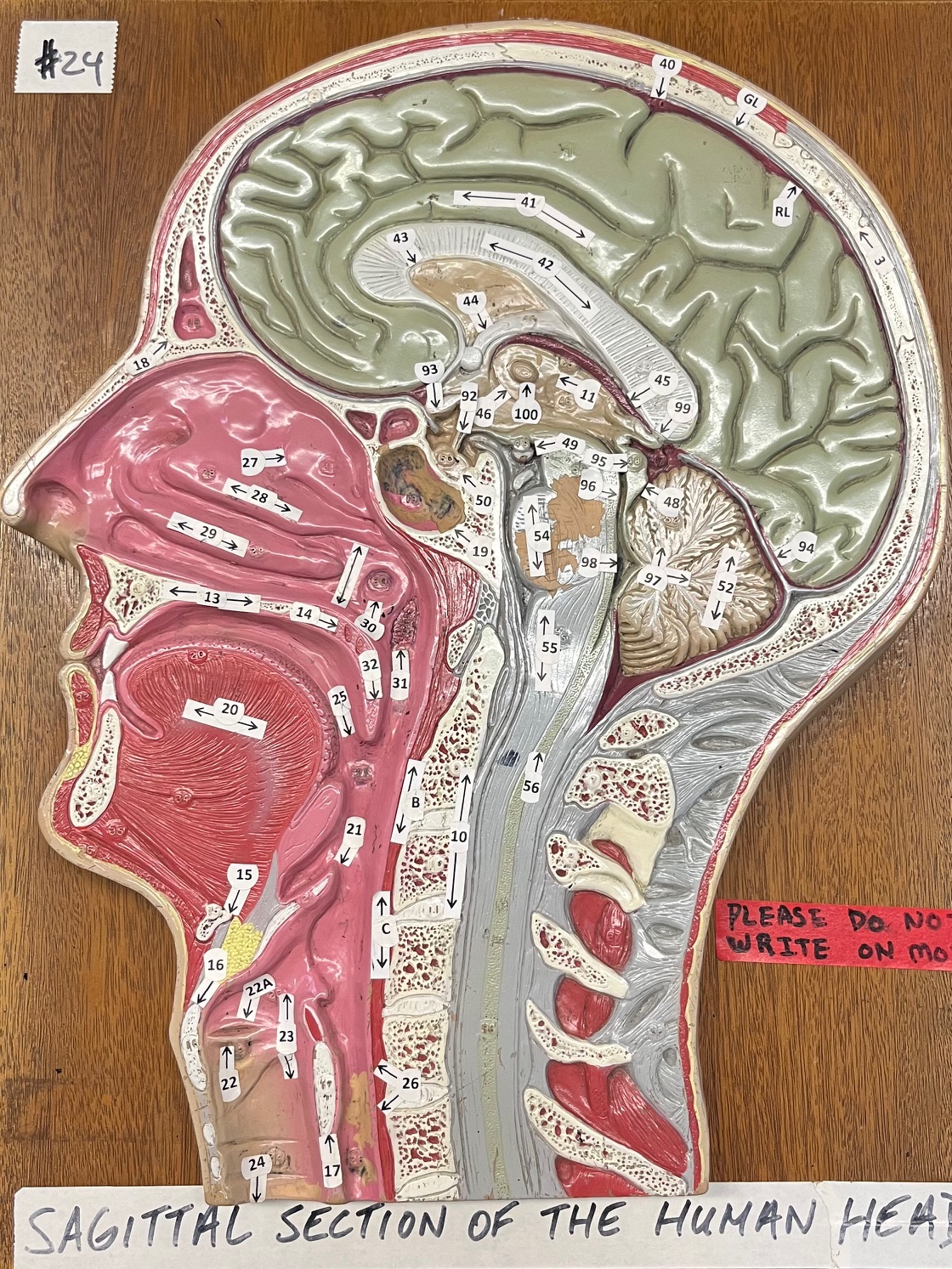
41
cerebral hemisphere, complex reasoning
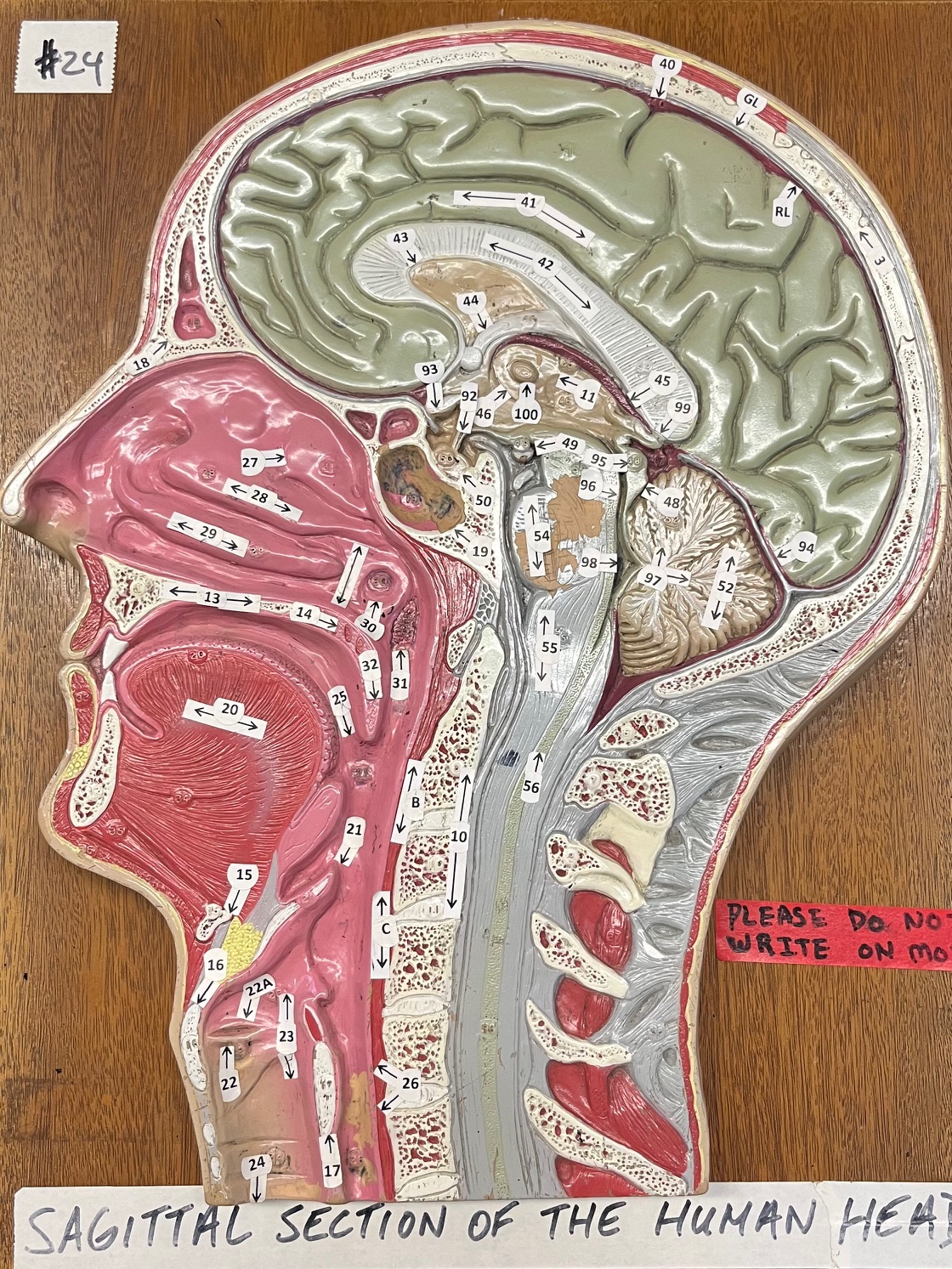
42
corpus callosum: provides communication by connecting cerebral hemispheres
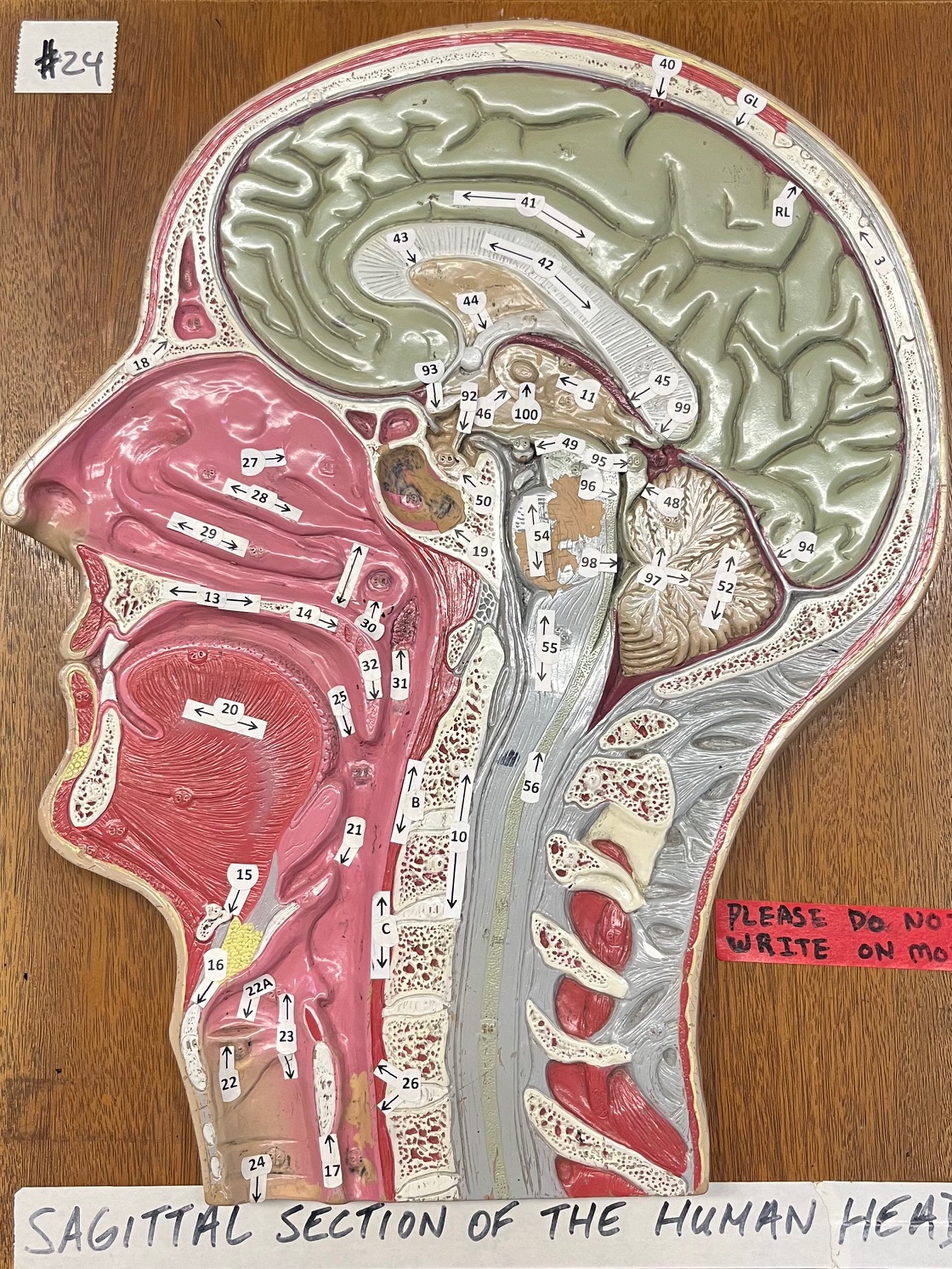
43
septum pellucidum: separates lateral ventricles
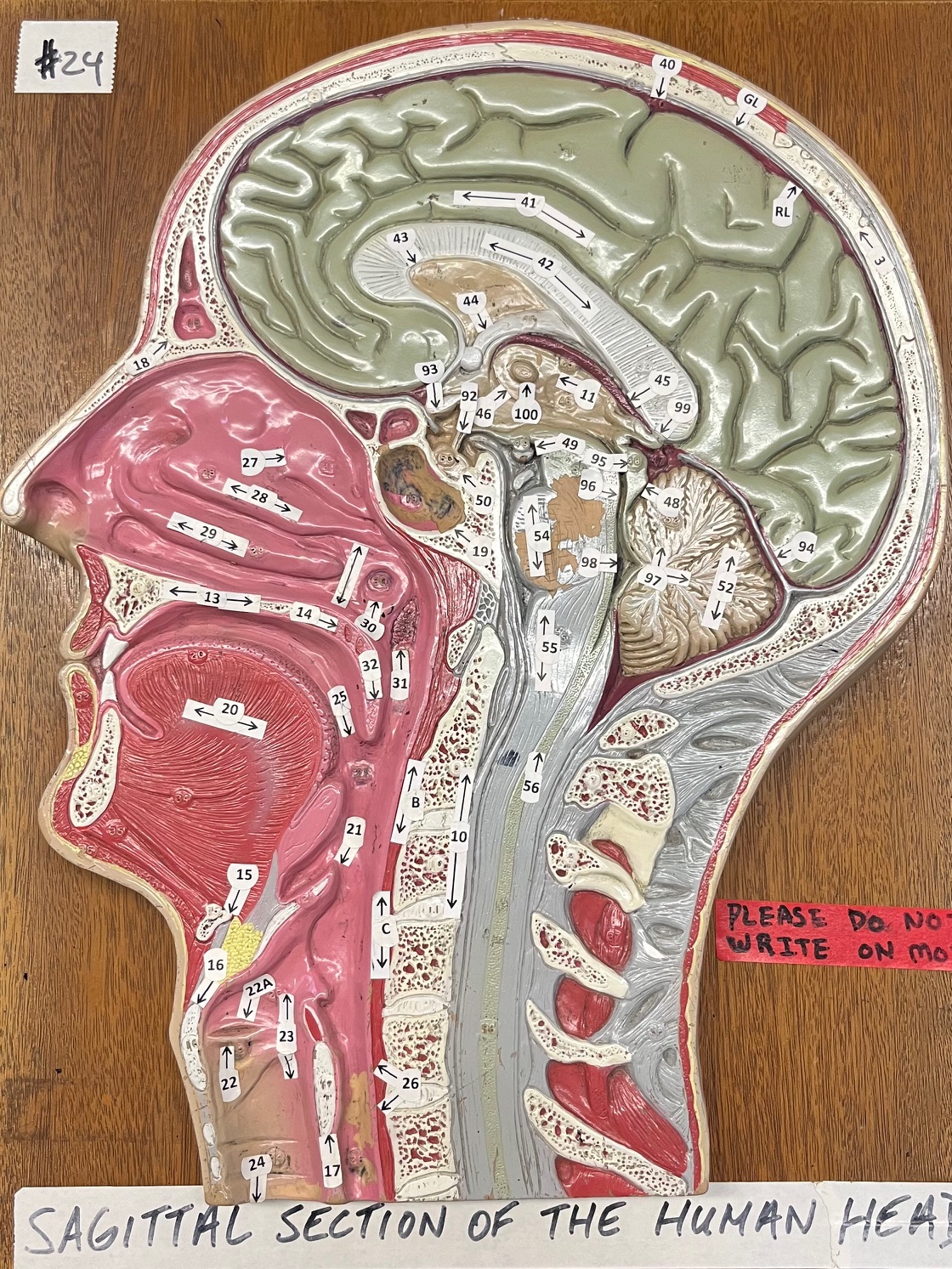
44
fornix: relays signals for memory and emotional regulation
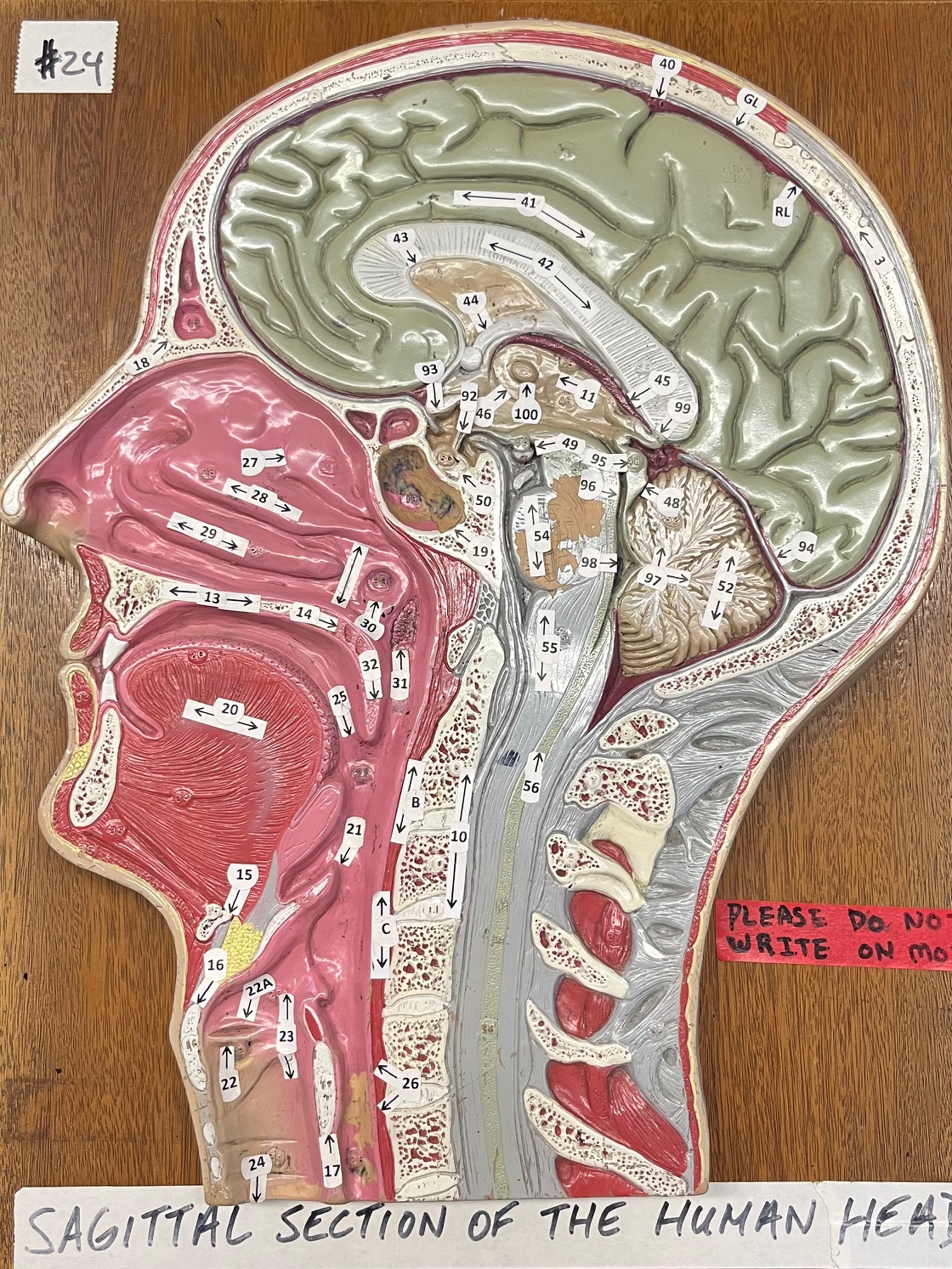
46
thalamus: major integrating and relay station for sensory impulses except smell
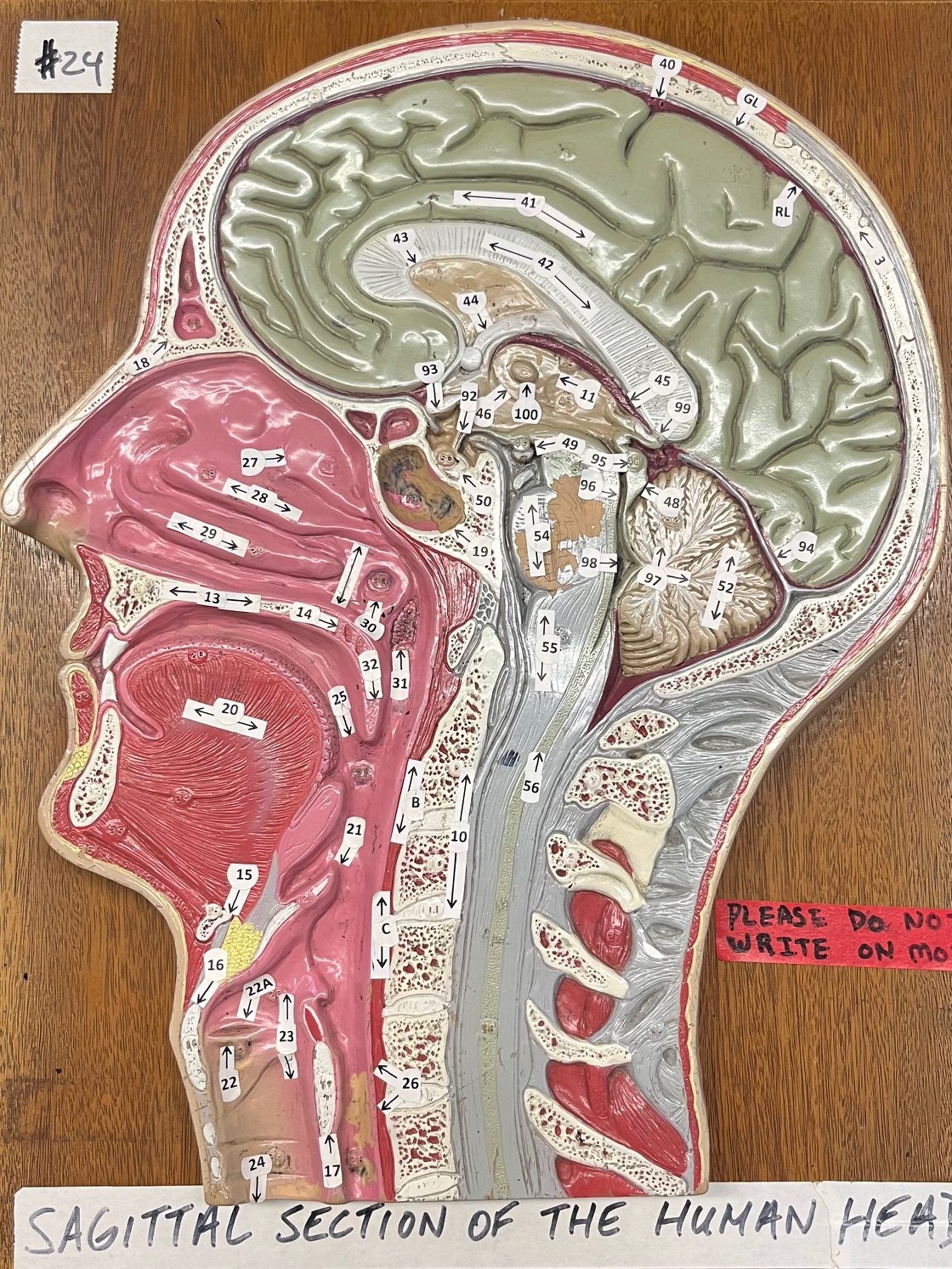
100
intermediate mass of thalamus: connects thalamic lobes
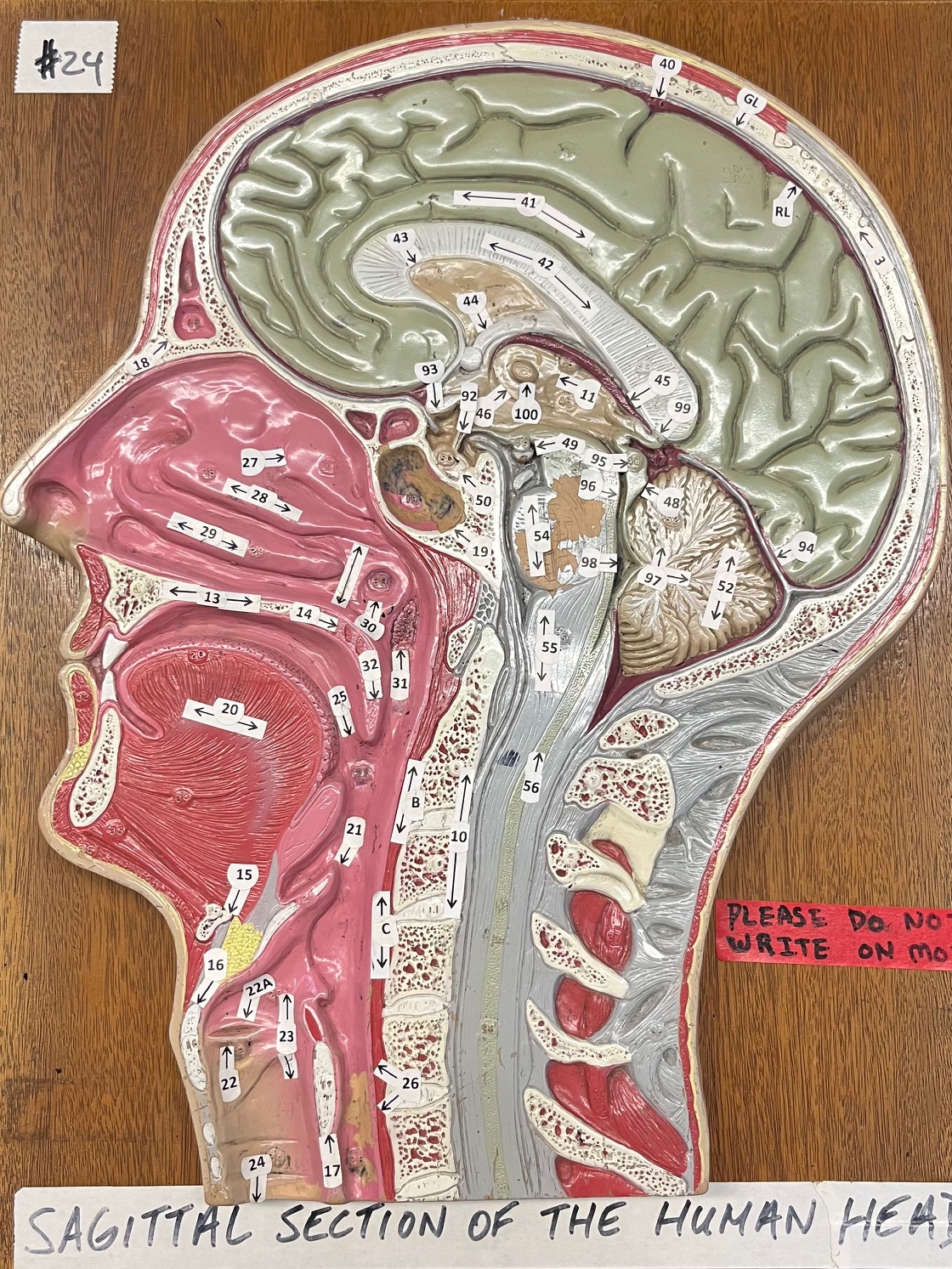
11
third ventricle: CSF flows from interventricular foramen to cerebral aqueduct
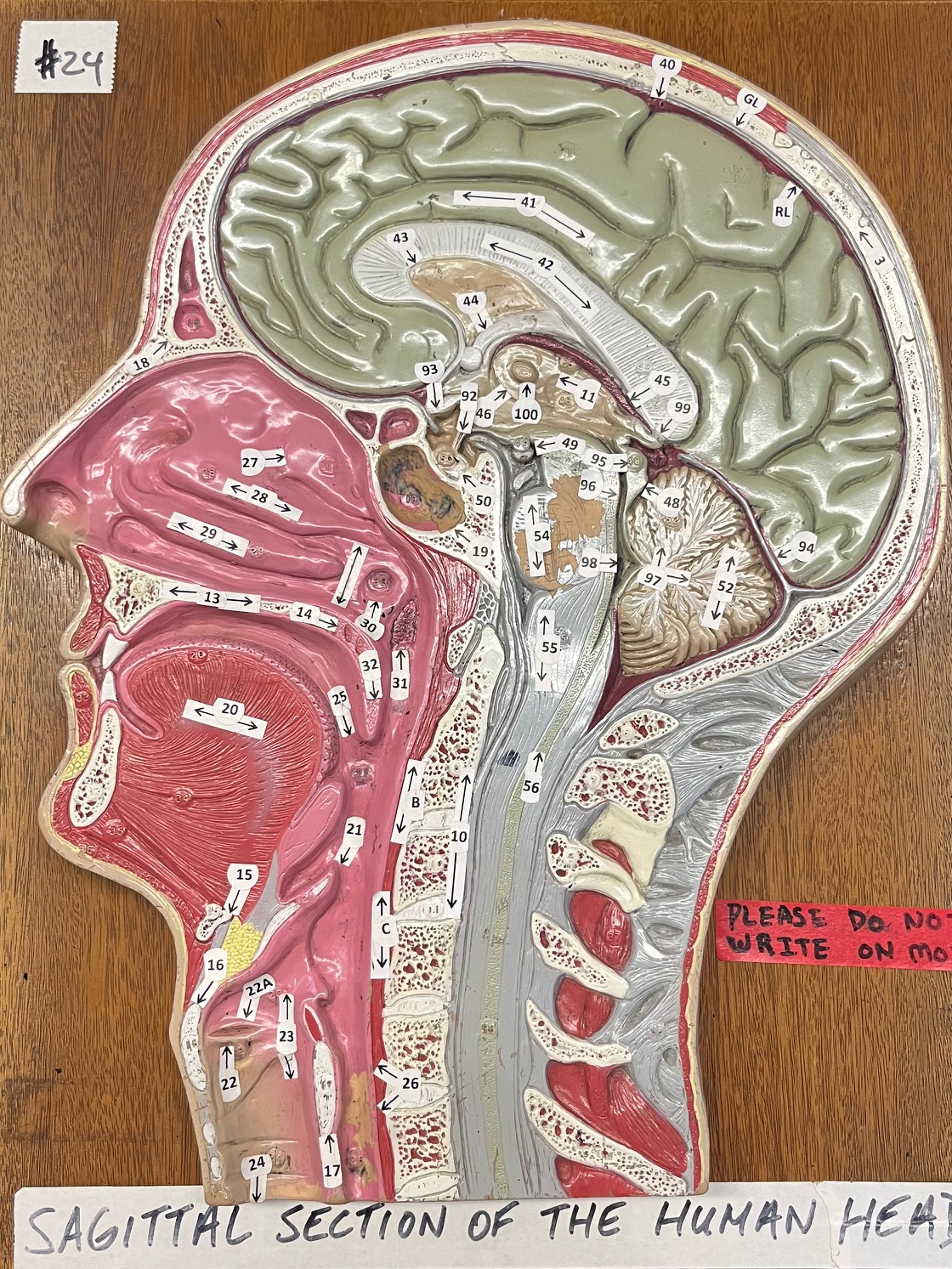
50
pituitary gland, produces hormones
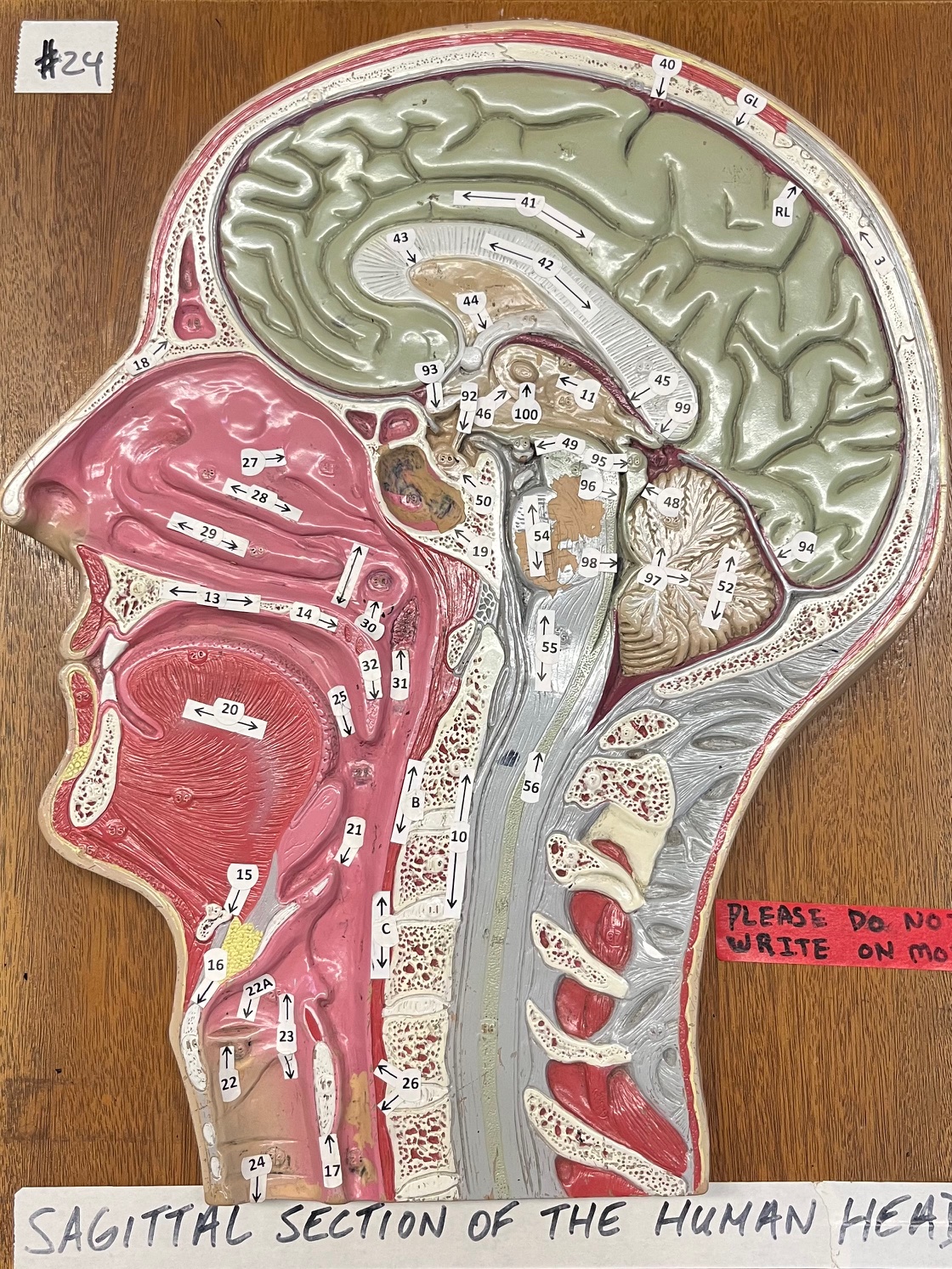
92
infundibulum, connects pituitary gland to hypothalamus
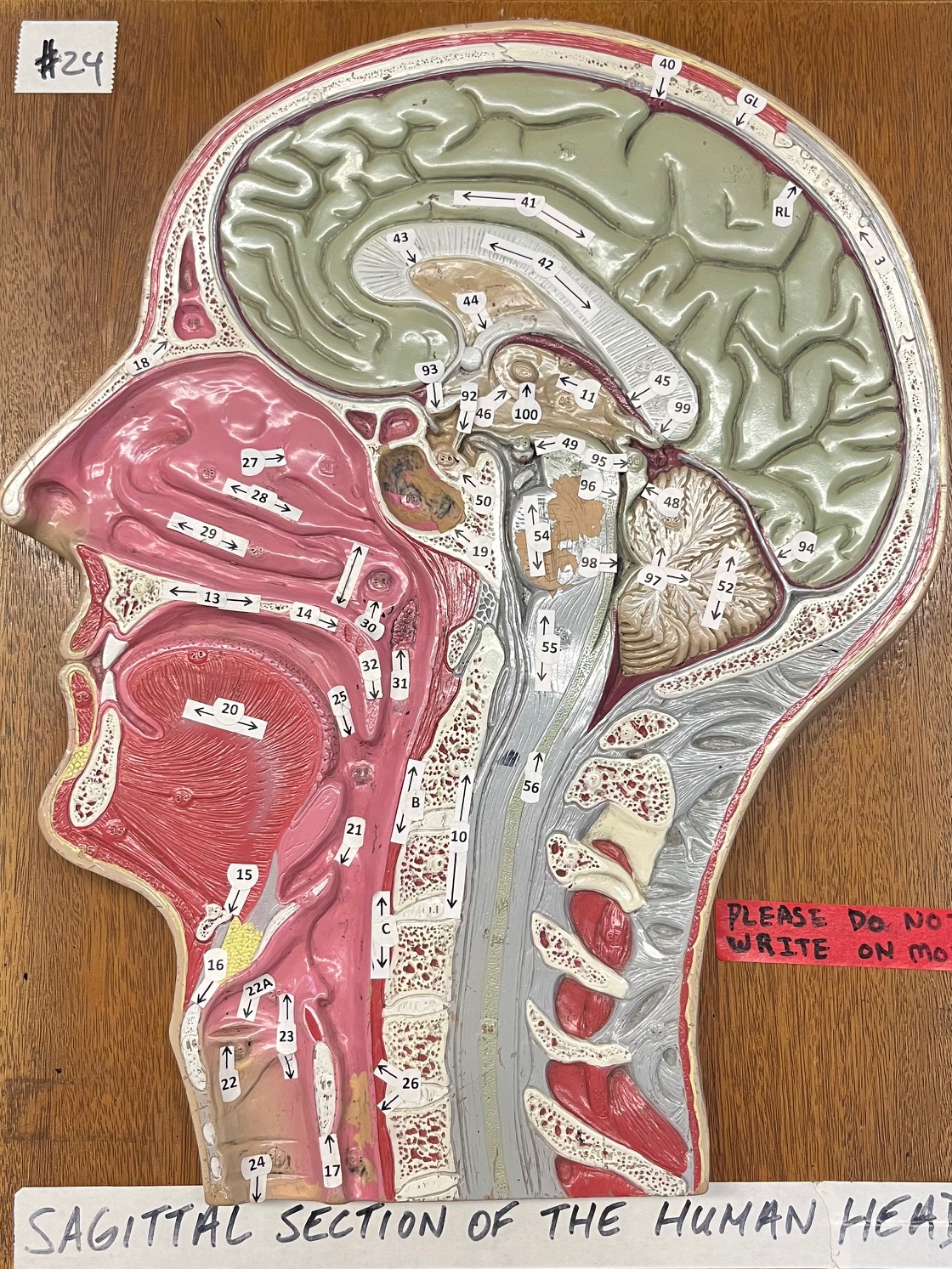
49
mammillary body, relay station for olfaction
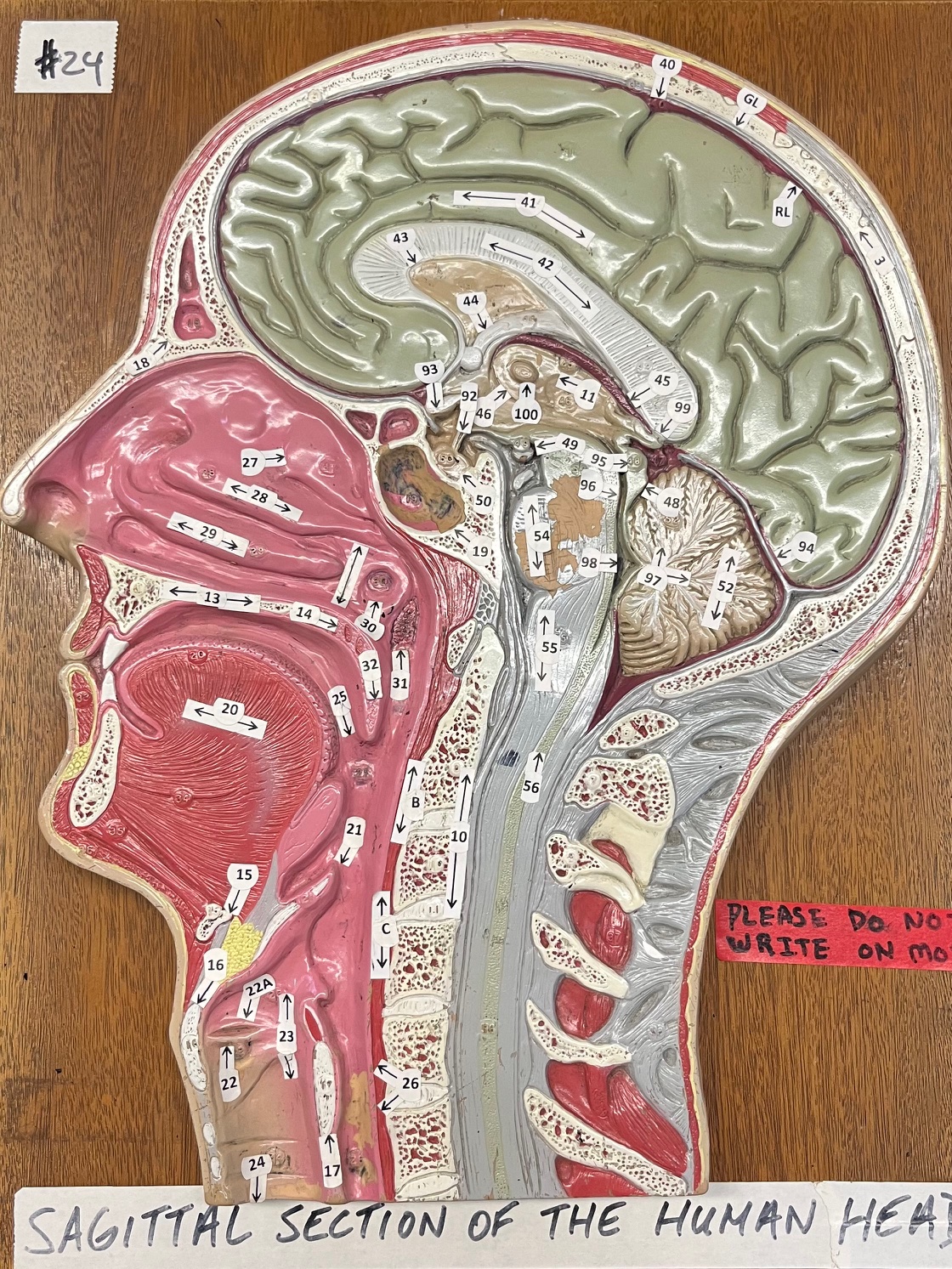
54
pons, connects brain with lower CNS centers
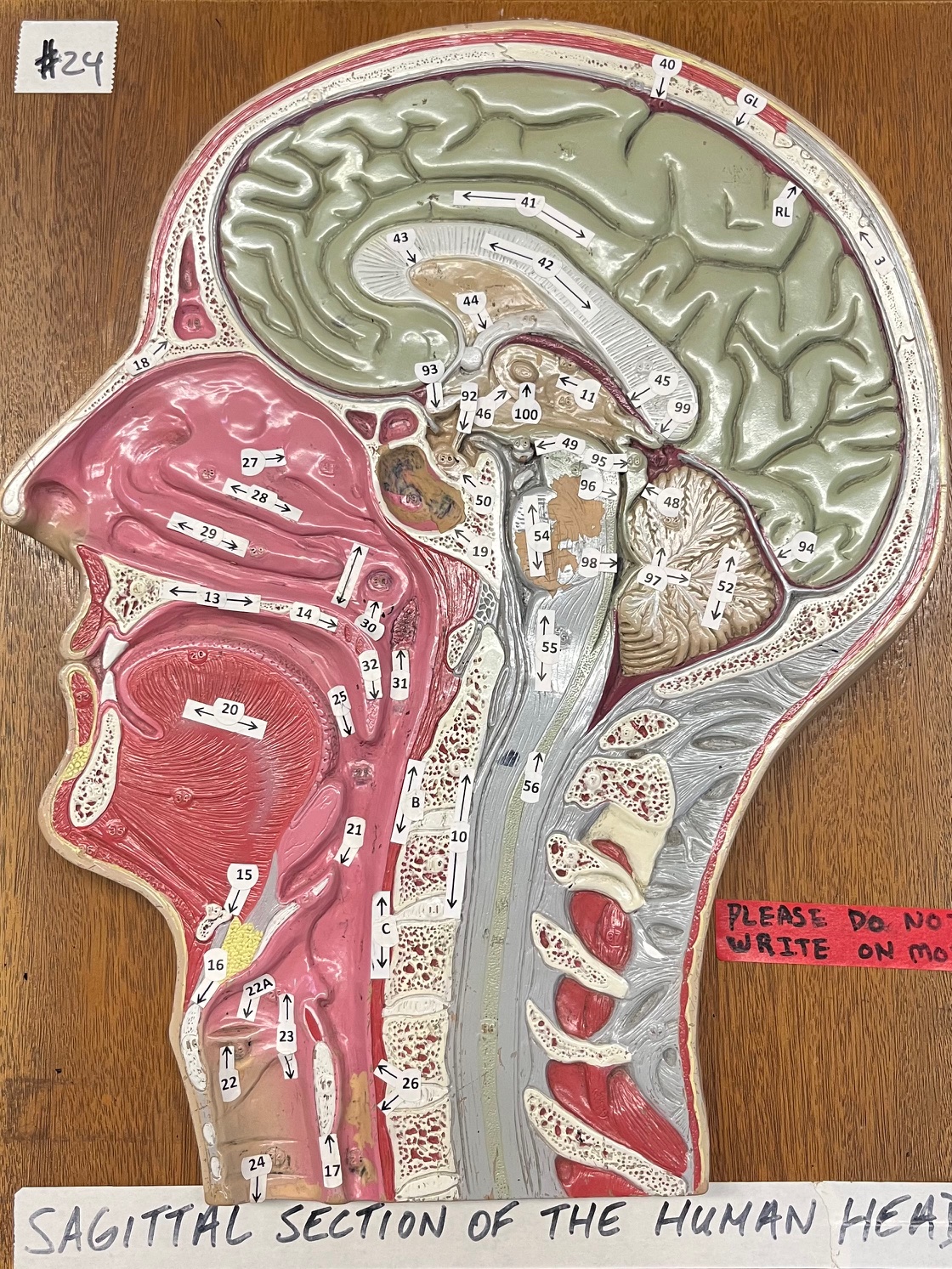
55
medulla oblongata, regulates vital autonomic functions like heart rate
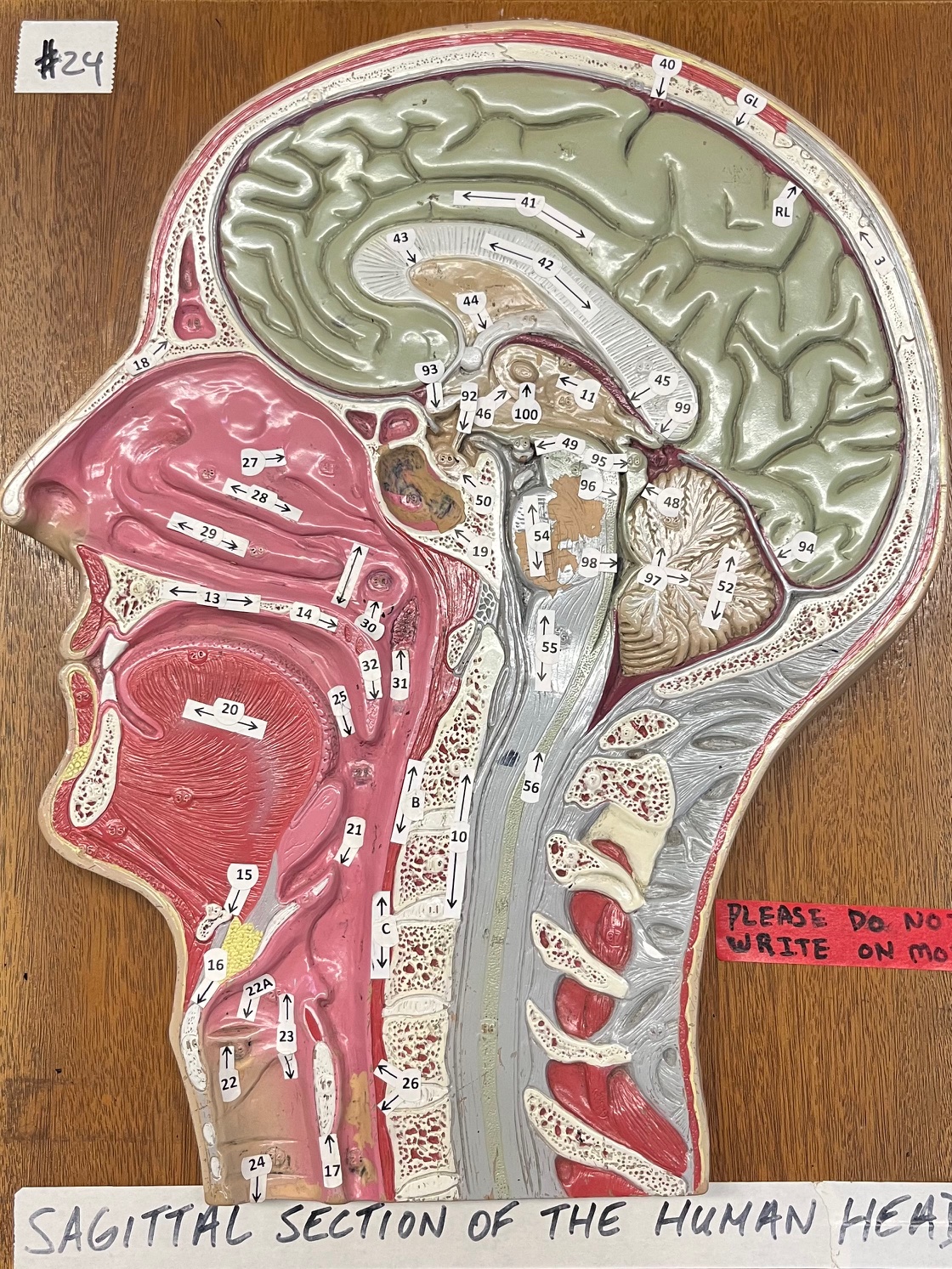
56
spinal cord: responsible for communication and reflexes.
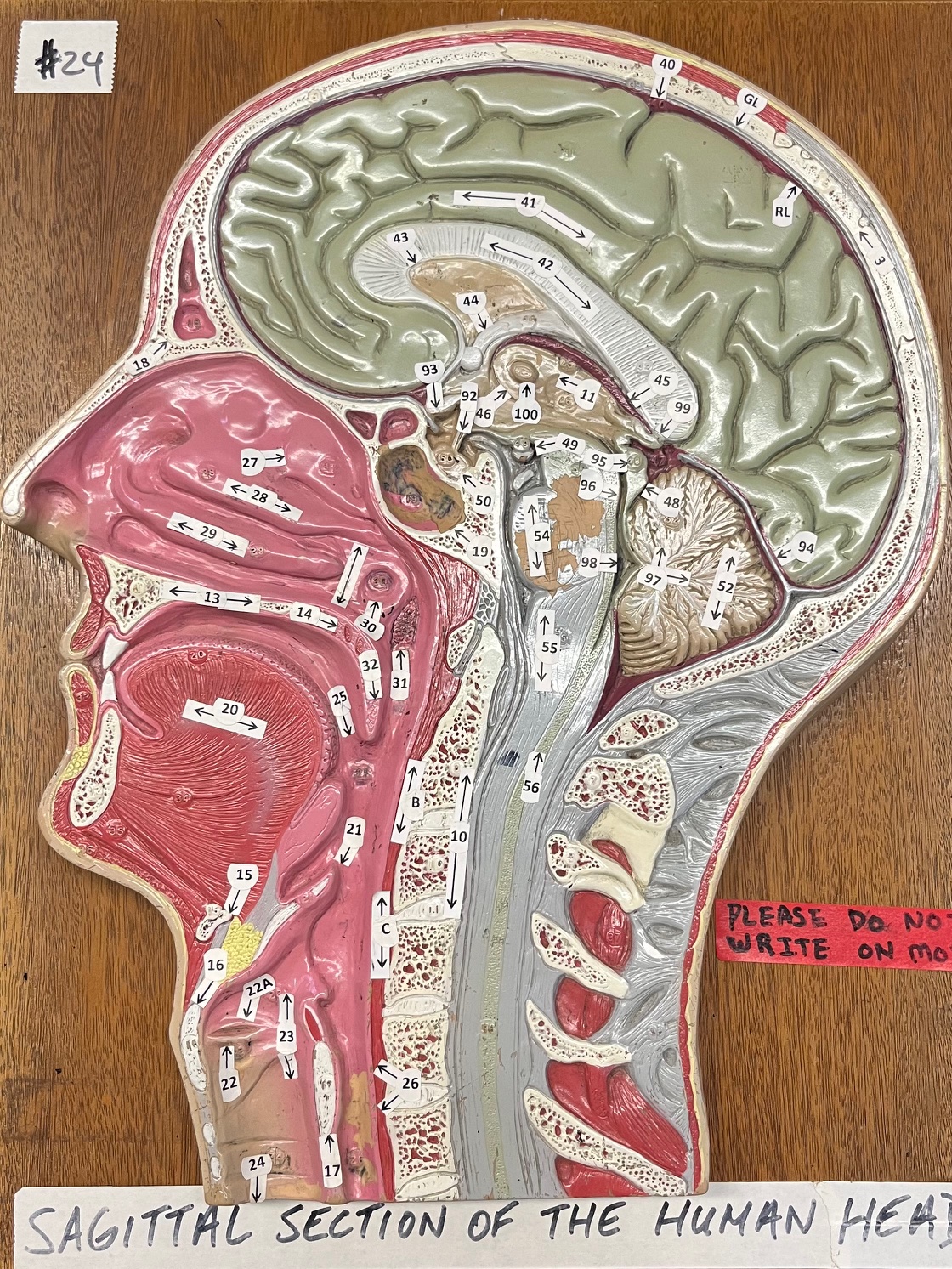
10
spinal column, protects spinal cord
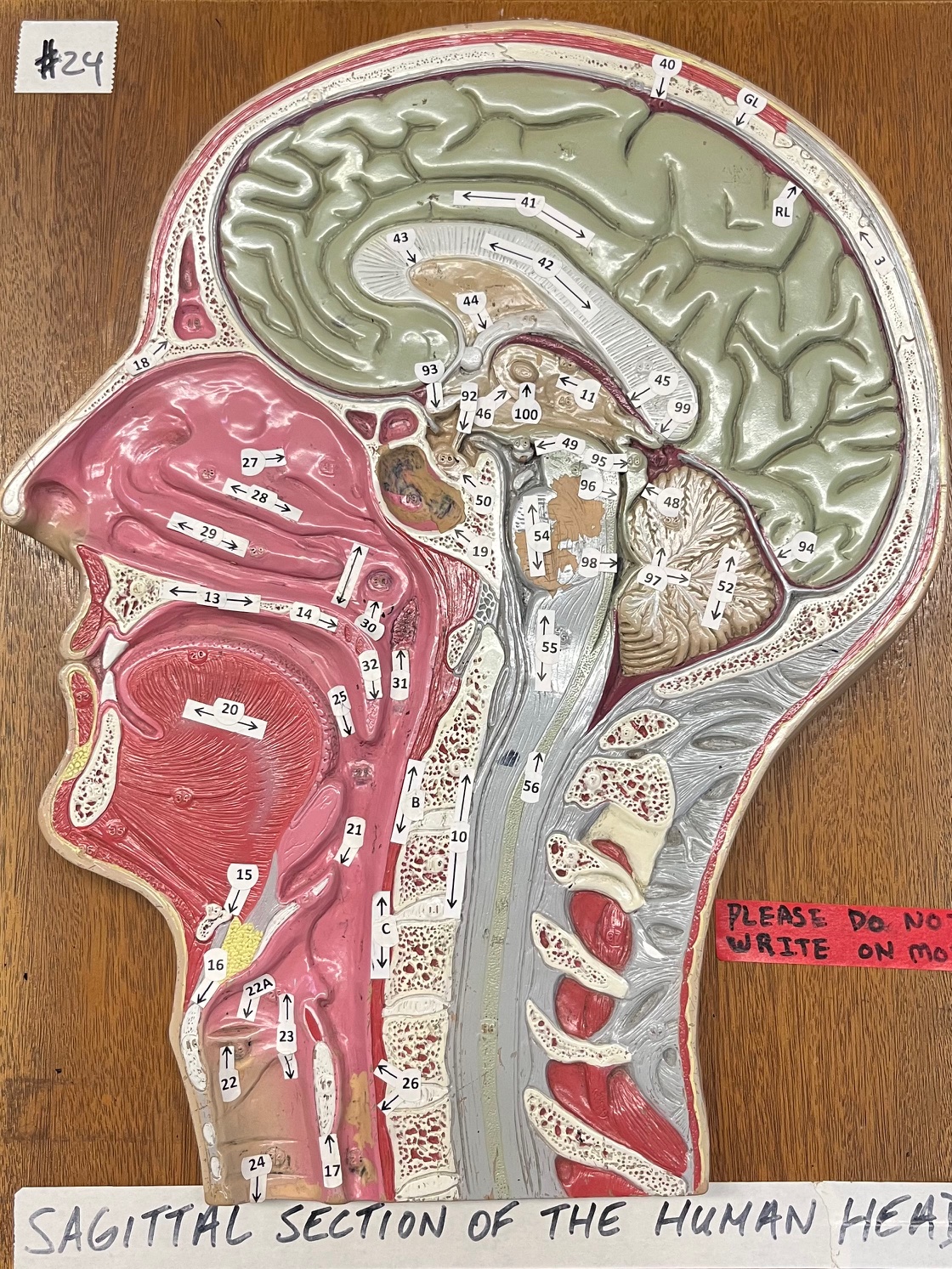
52
cerebellum: subconscious monitoring of body position and tension.
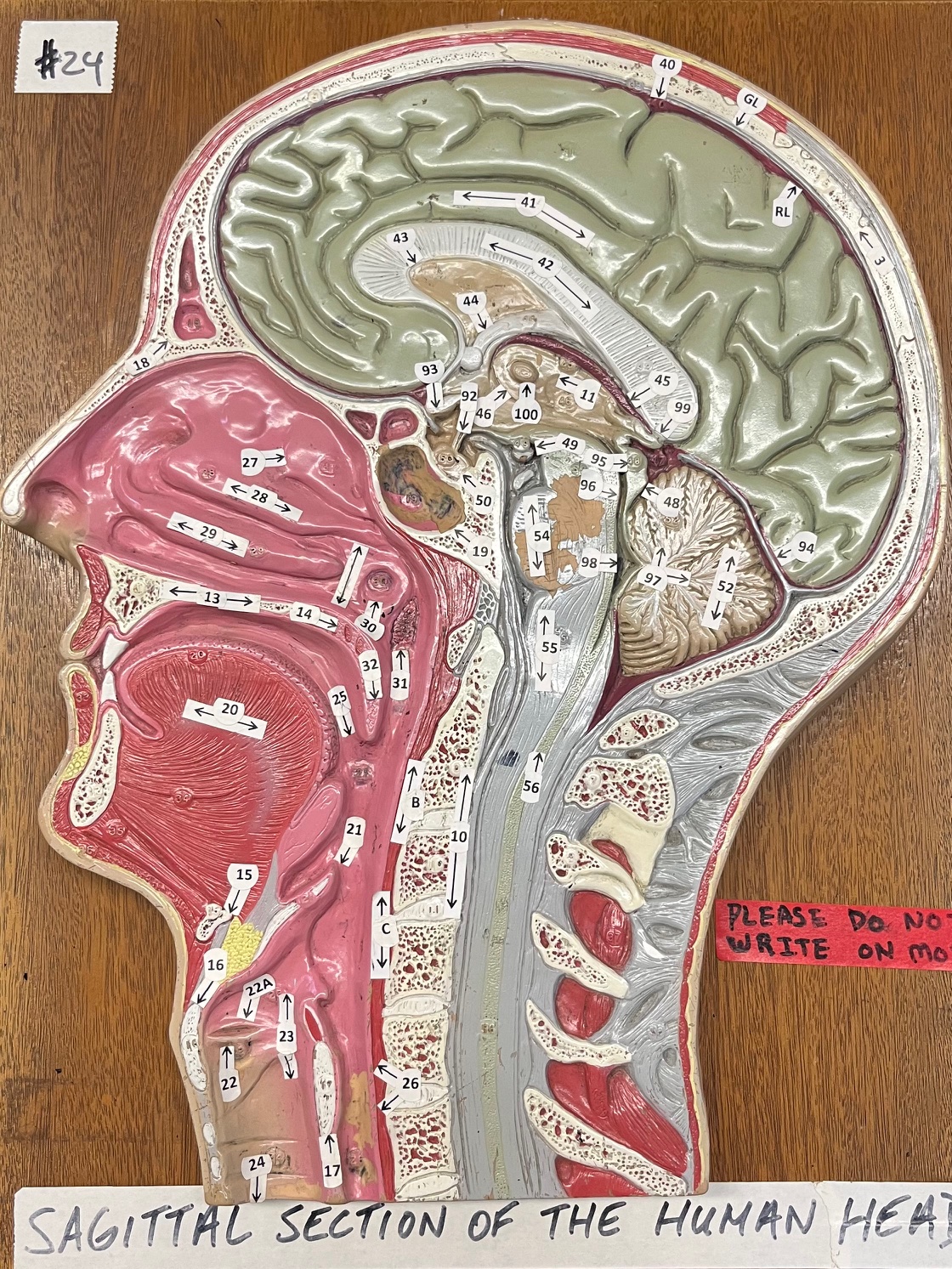
45
choroid plexus: makes CSF
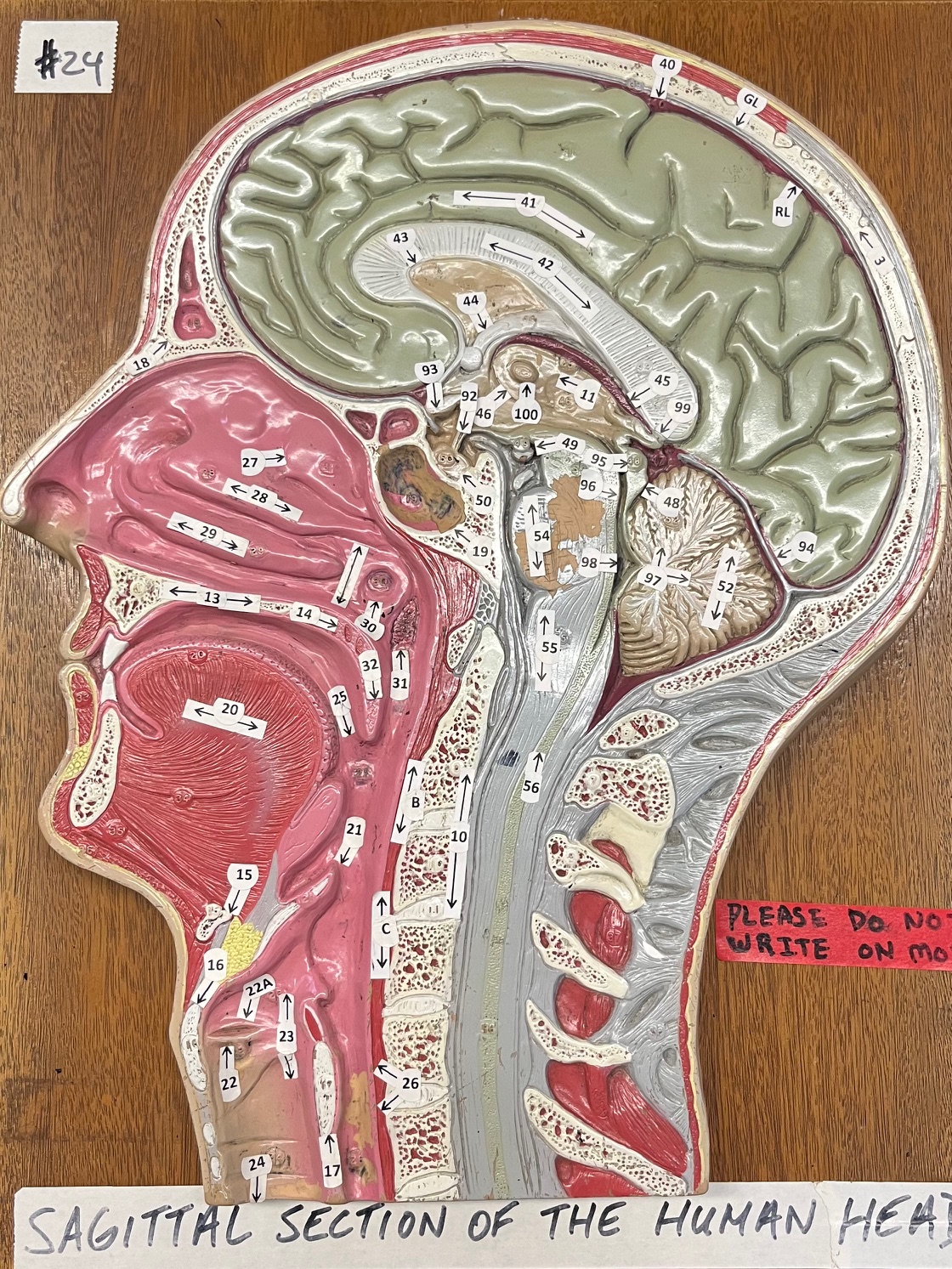
99
pineal gland, produces melatonin
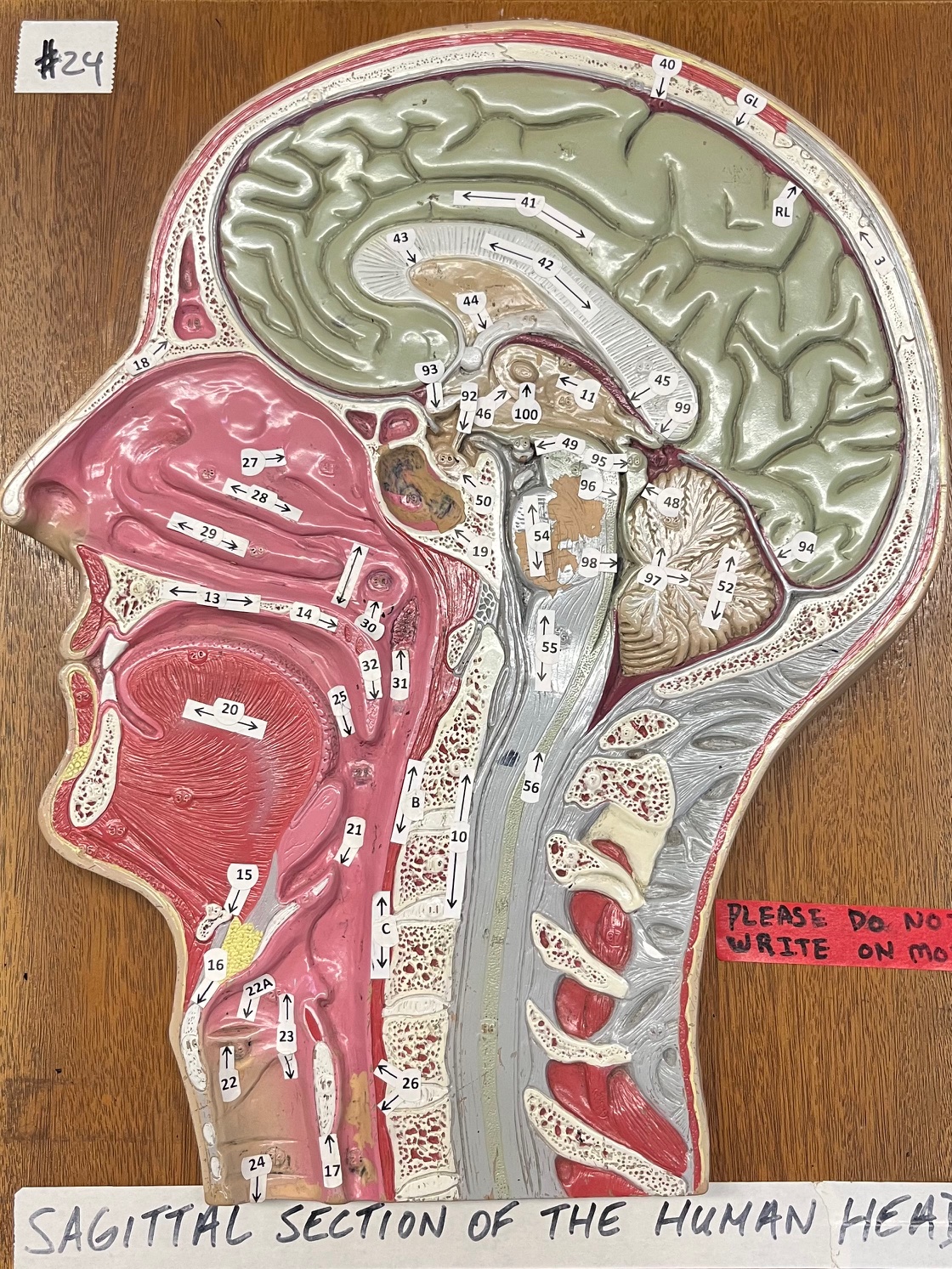
98
fourth ventricle: CSF flows from cerebral aqueduct to central canal
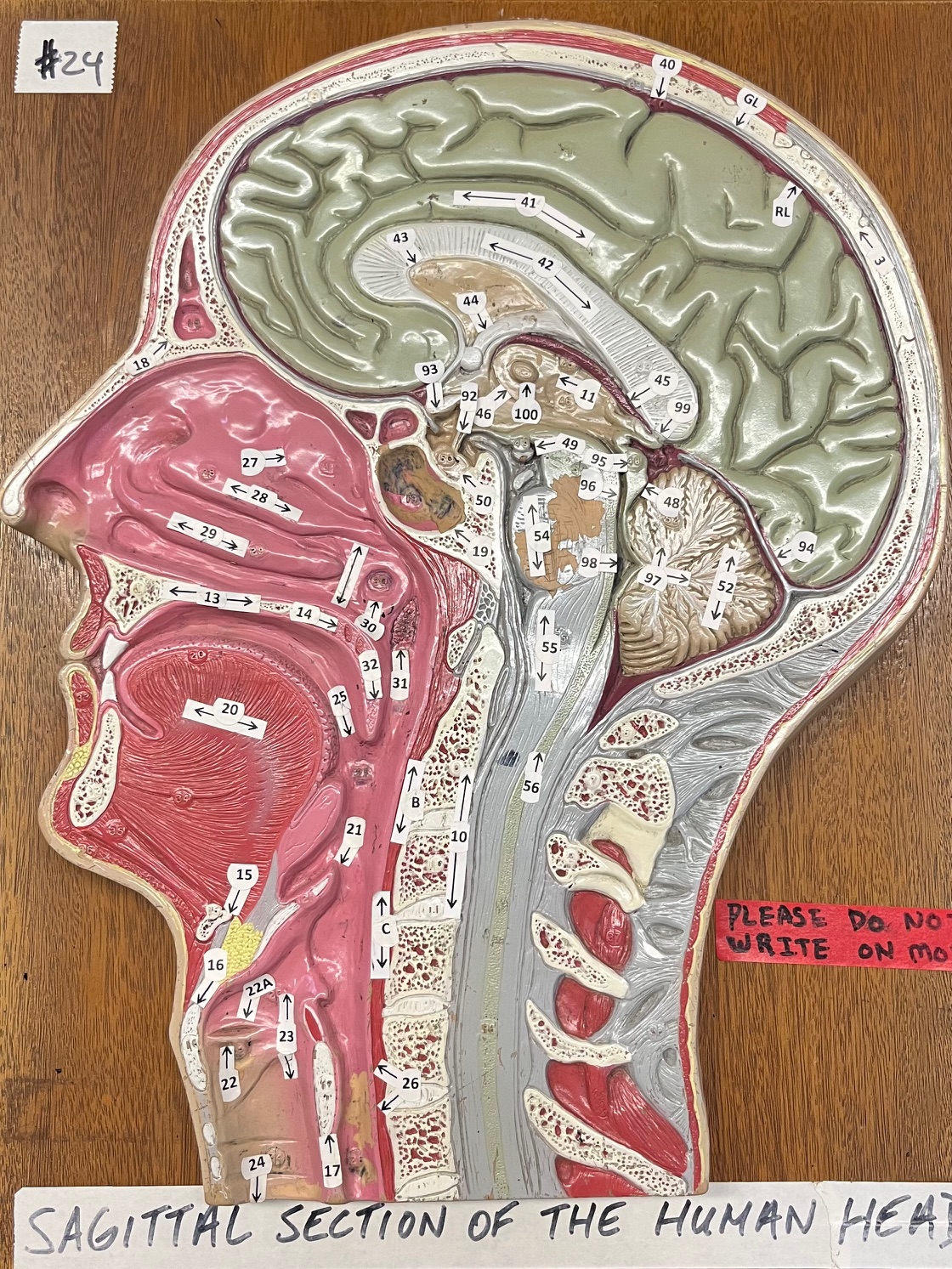
97
arbor vitae: carries sensory and motor information to and from cerebellar cortex
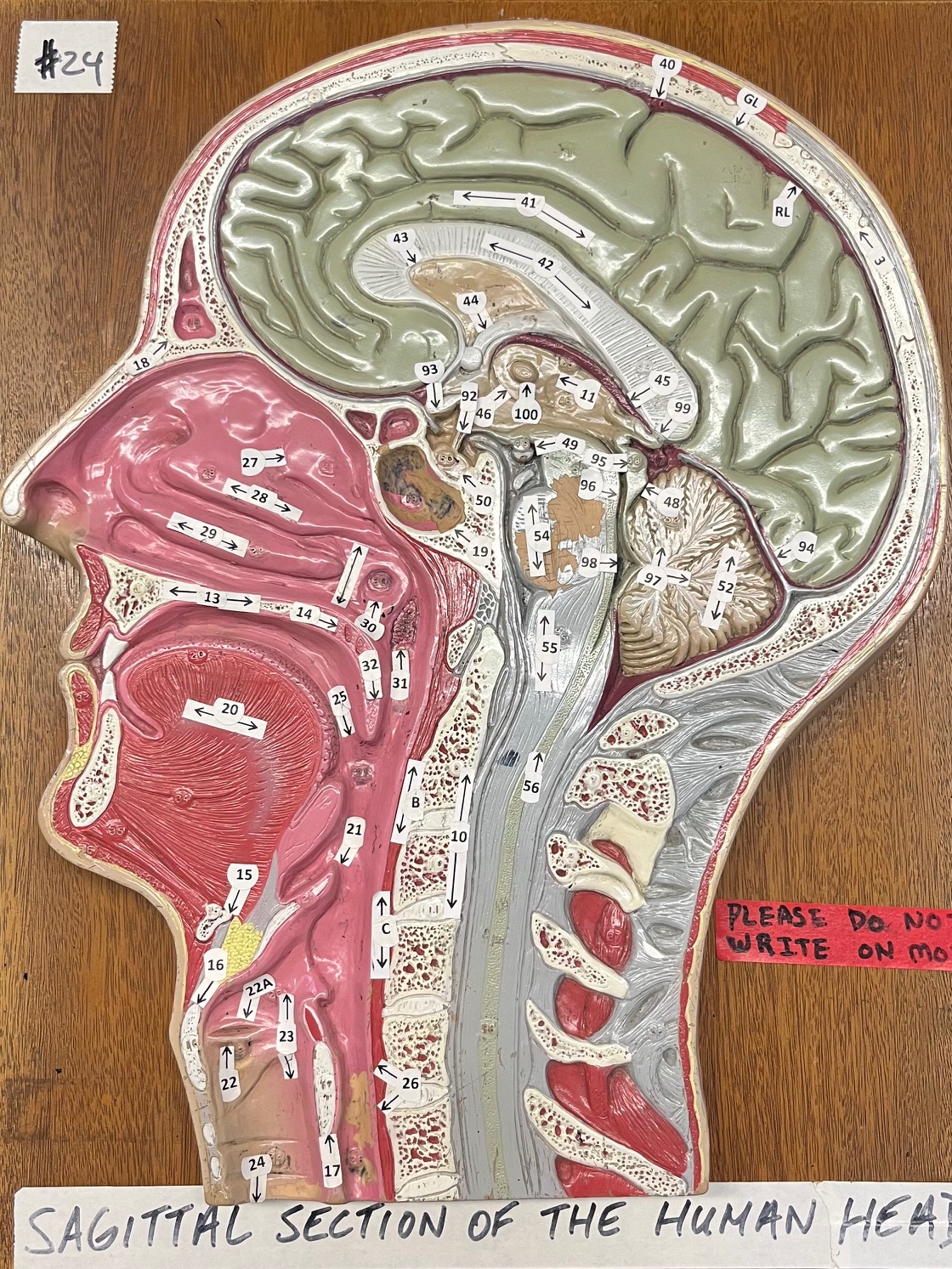
96
cerebral aqueduct: takes CSF from third to fourth ventricle
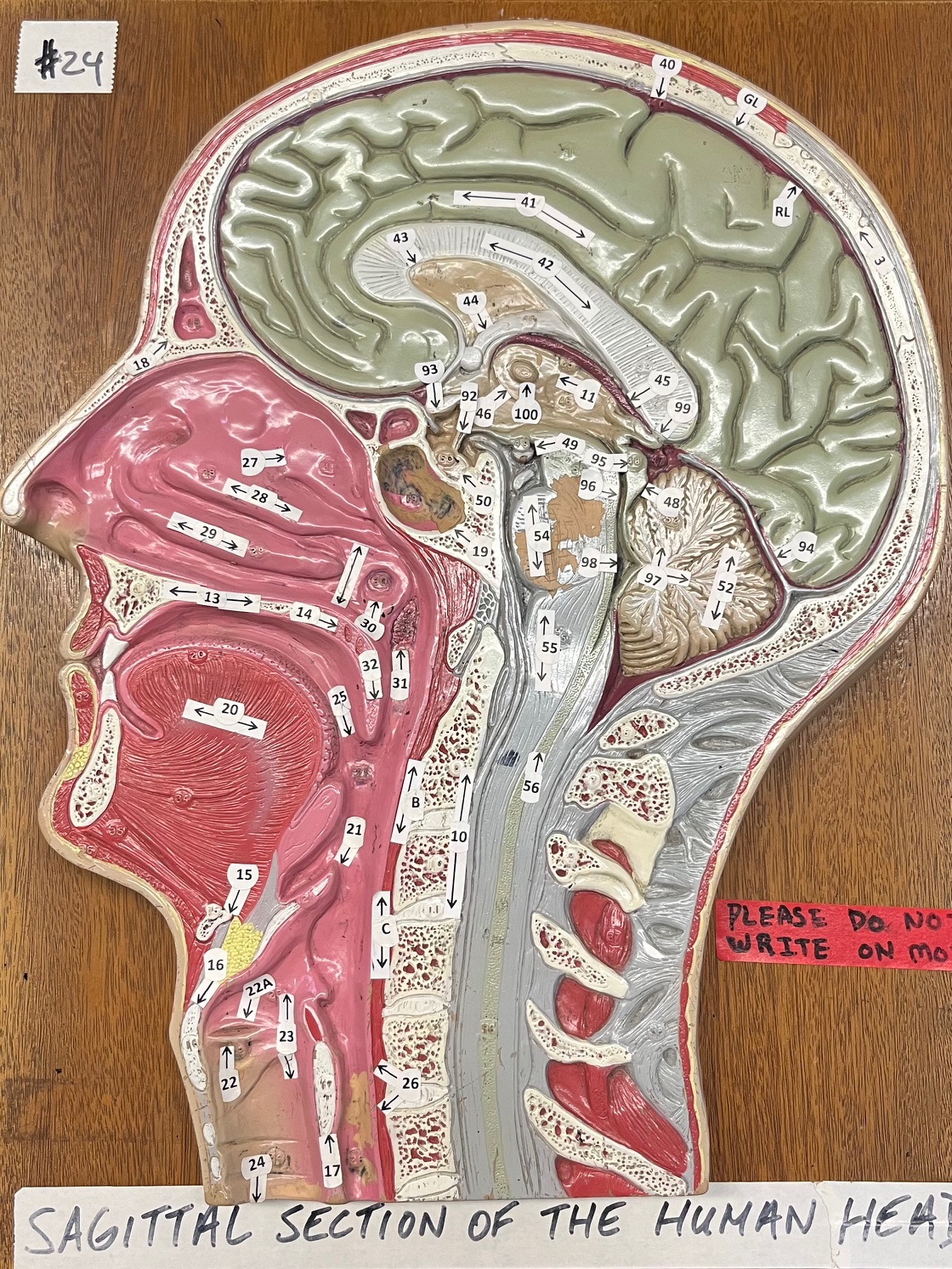
95
superior colliculi of corpora quadrigemina: responsible for visual reflexes
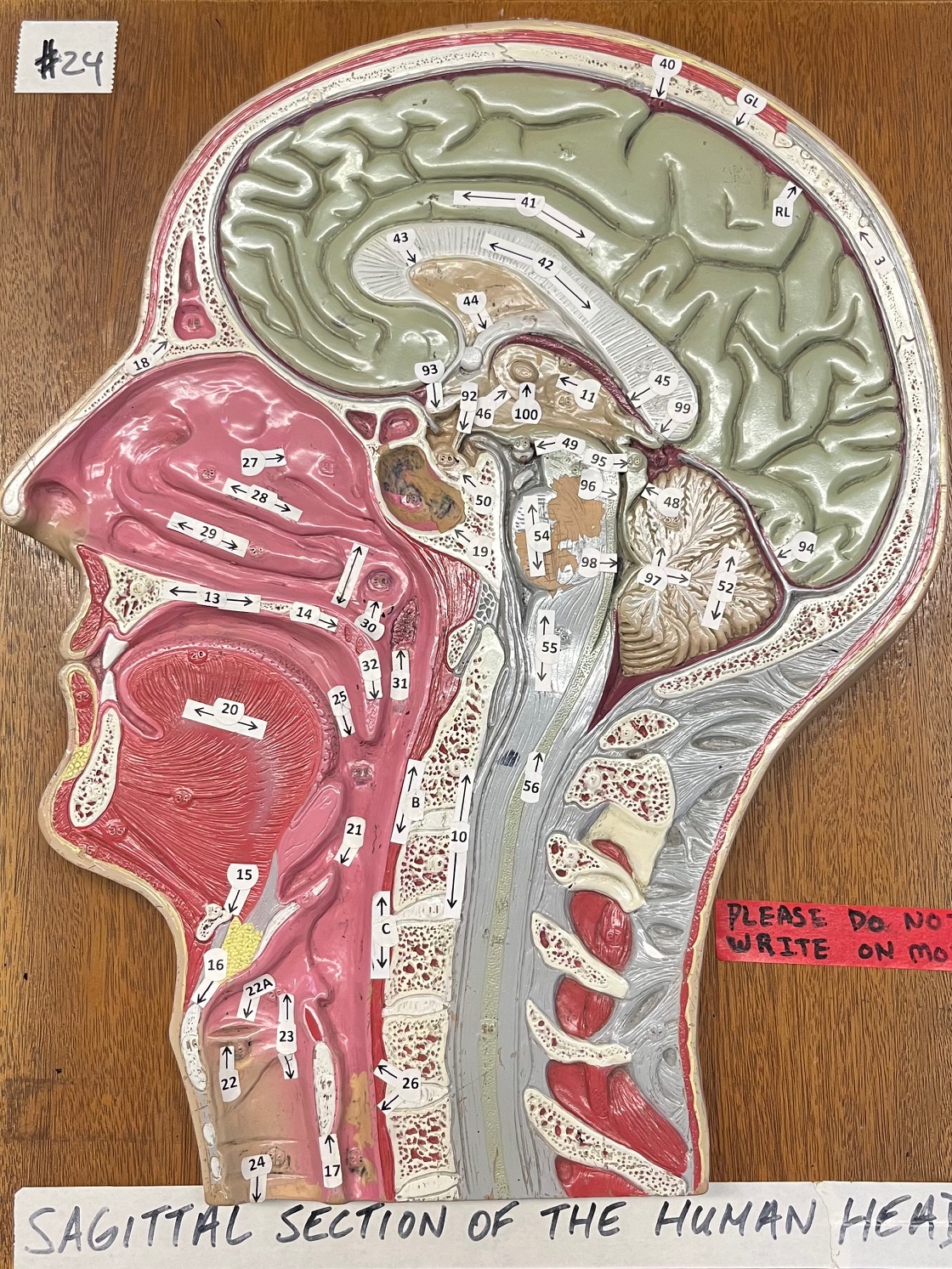
48
inferior colliculi of corpora quadrigemina: responsible for auditory reflexes
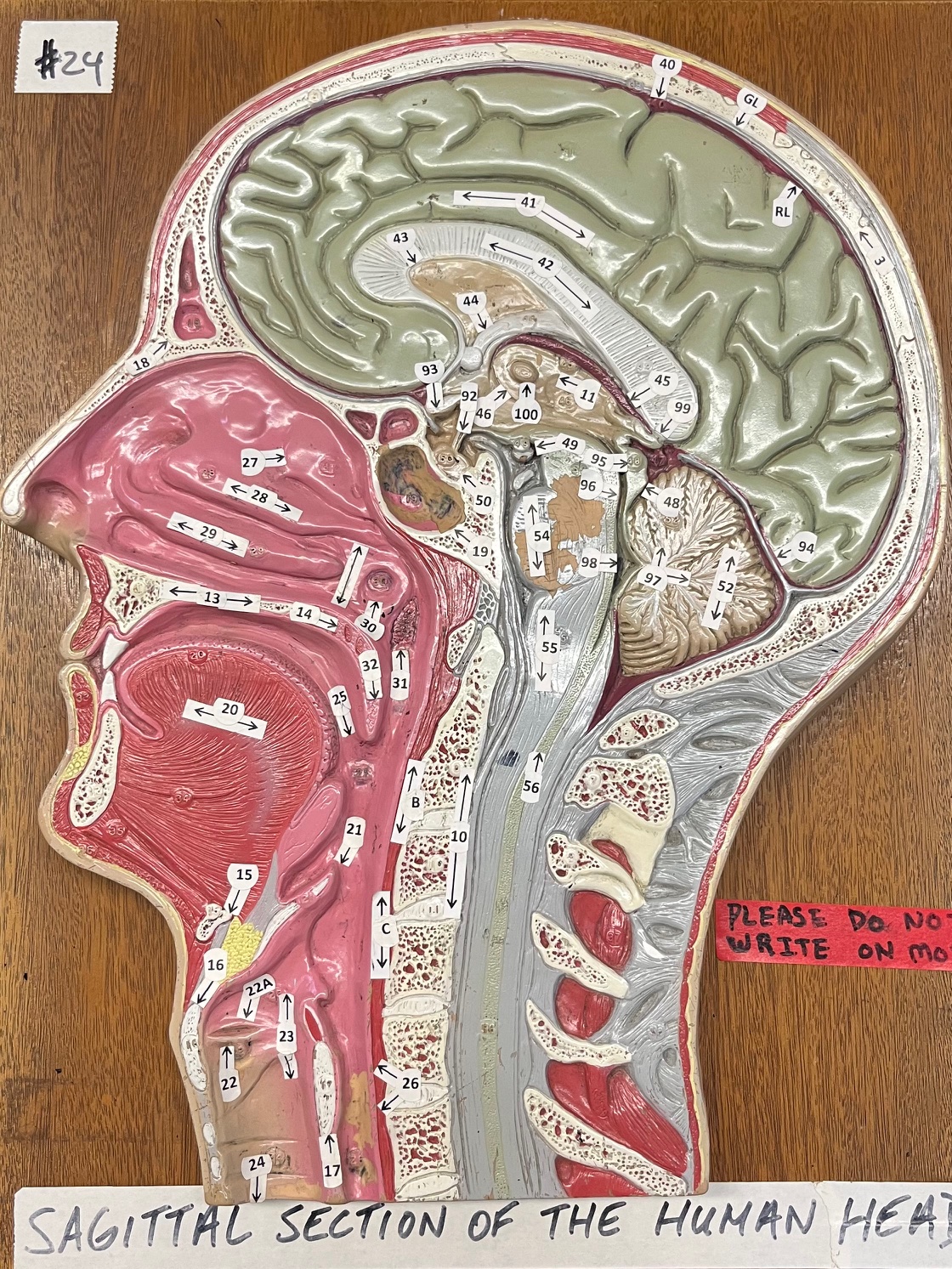
94
straight sinus: involved in CSF flow
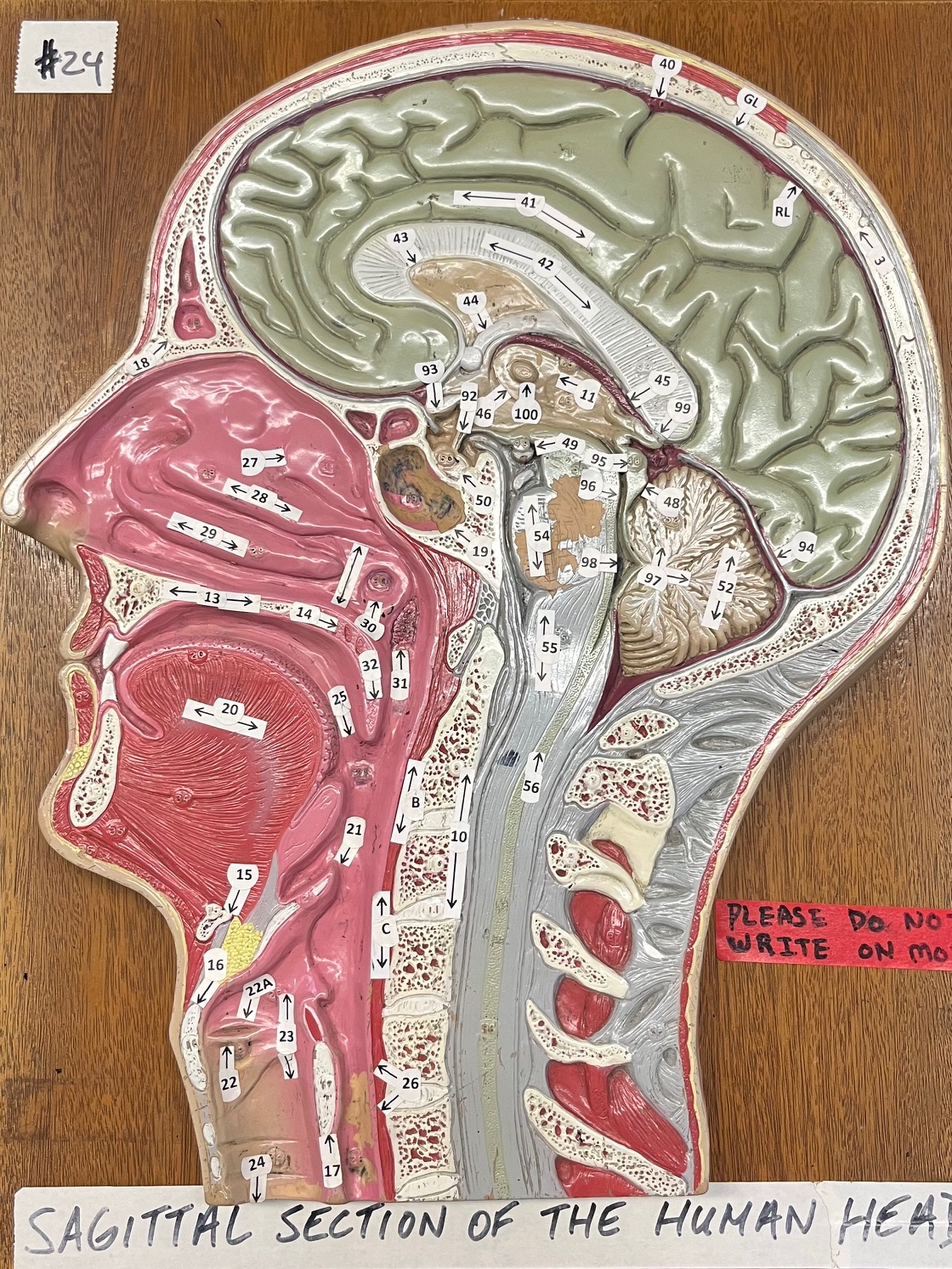
93
optic chiasma, area where medial portion of optic nerves cross
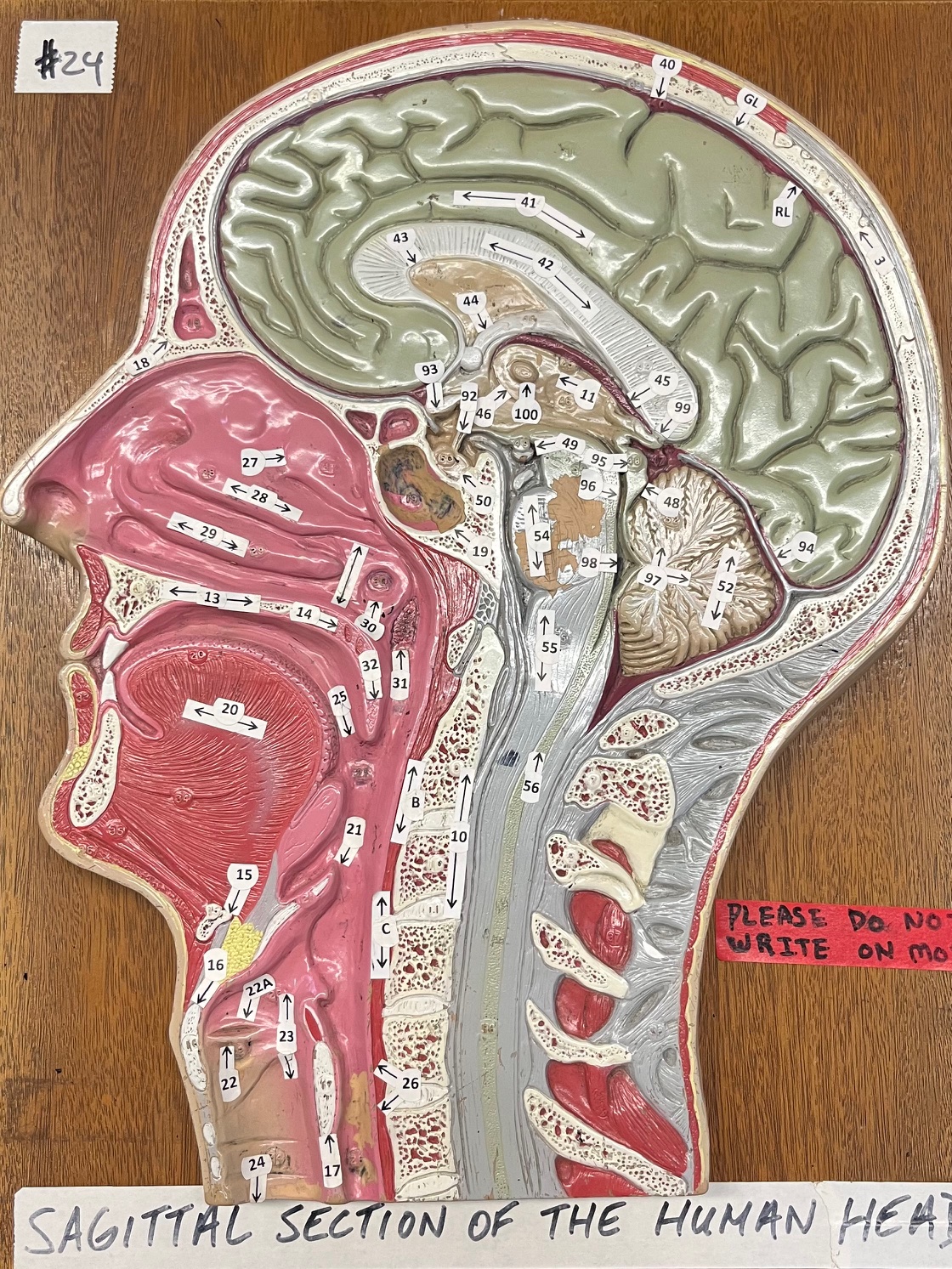
40
arachnoid villus, reabsorbs CSF into bloodstream
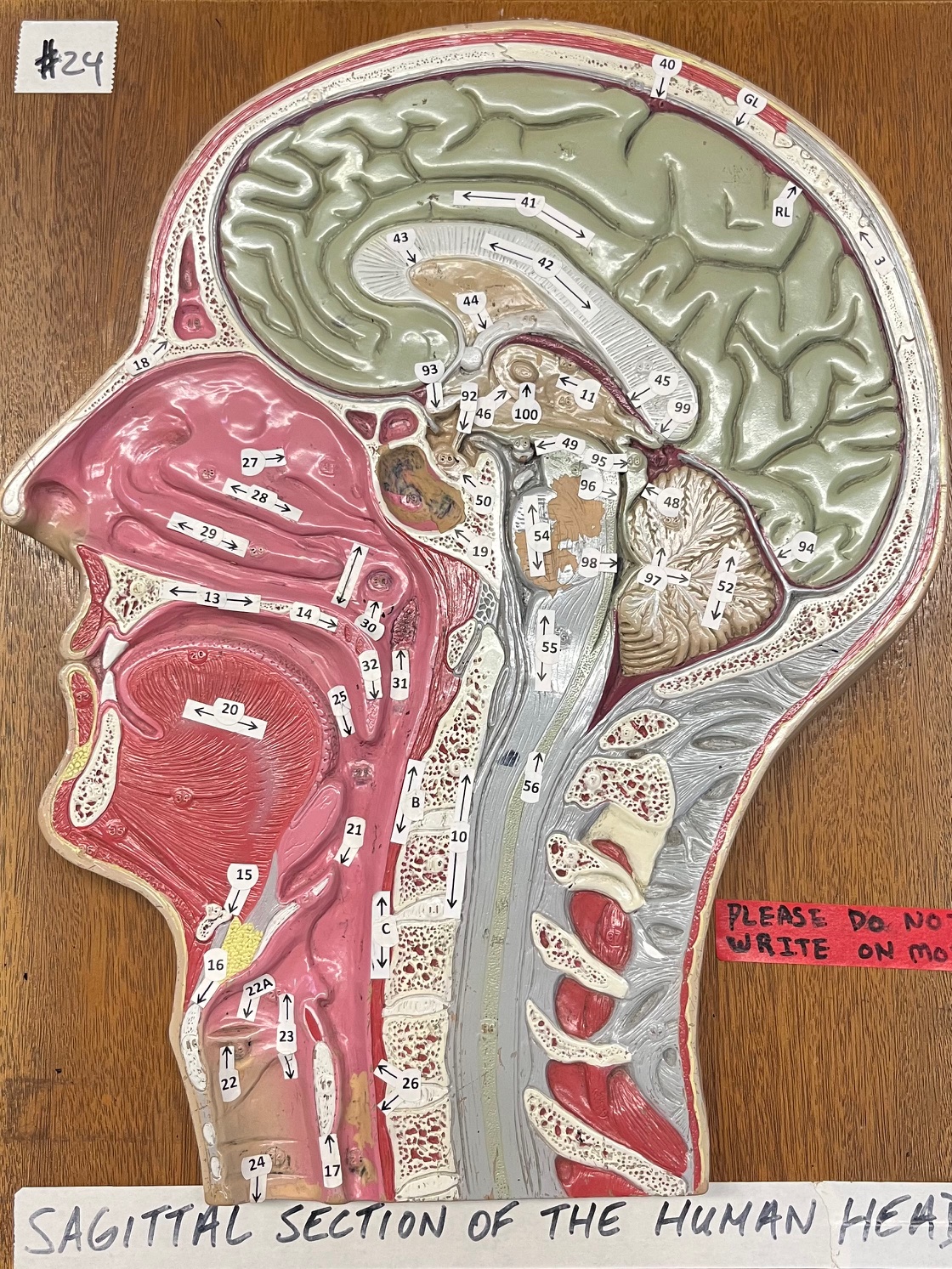
grey line (GL)
dura mater, thick covering that protects brain
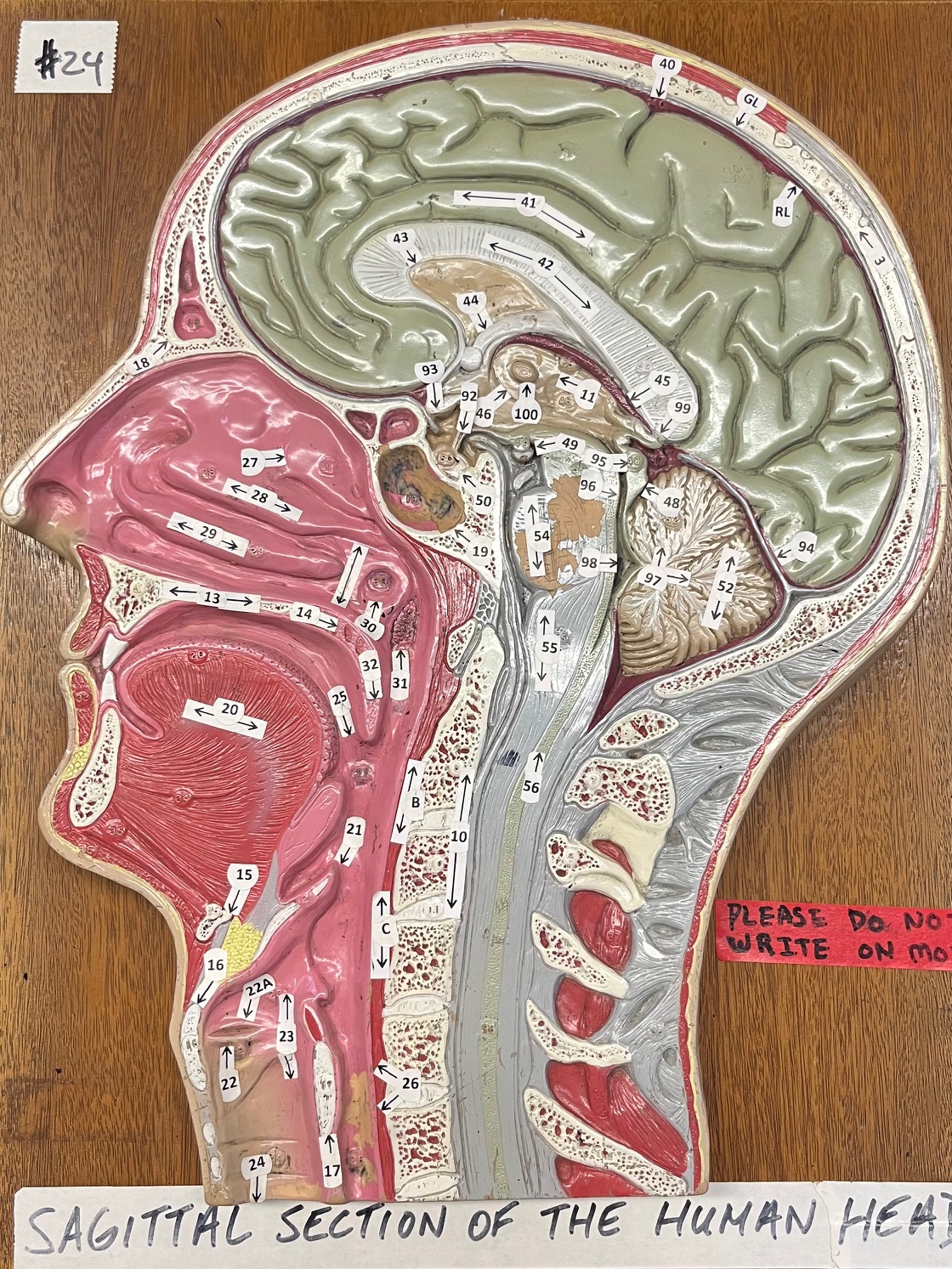
red line (RL)
arachnoid mater: protects brain by cushioning and supporting it by housing CSF.
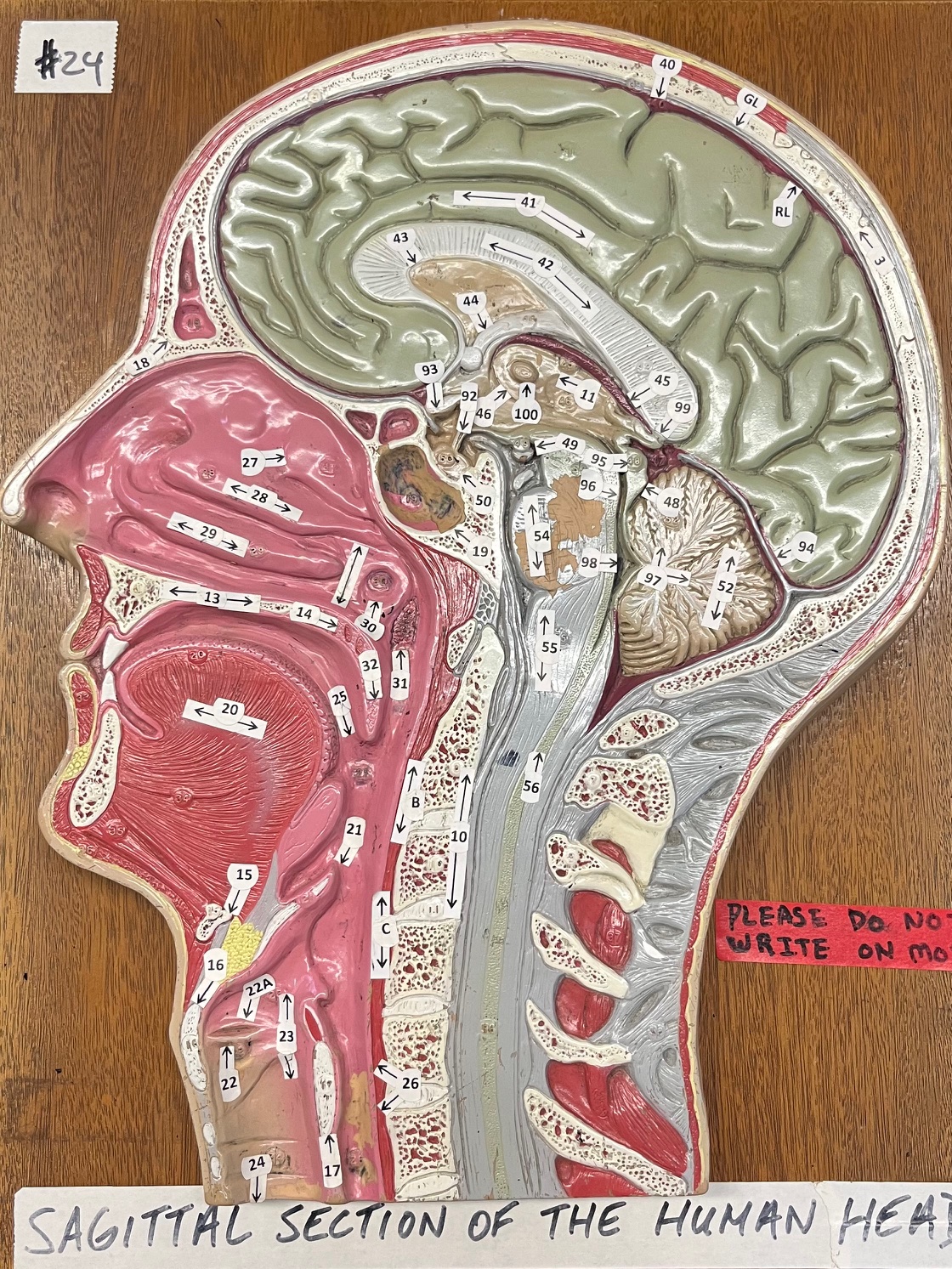
3
bone of the skull, protects the brain