Great Britain: Notable Groups, Organizations, and Movements
 Call Kai
 Learn
 Practice Test
 Spaced Repetition
 Match
 Flashcards
 Knowt Play
1/14

There's no tags or description
Looks like no tags are added yet.
15 Terms
1678 - 1760 - Tories / Tory Party / Tory Movement (All Facts)
English (British) Political party formed during the reign of King Charles II
They were conservative
Their political base was at Oxford (Oxford University)
They supported the reign of (Catholic) James II of England
Its establishment represented the emergence of a two-party system for the first time in history, in England
They
were critical of their political rivals because they feared that their political rivals undermined the established order
were denounced by their political rivals as “papists in disguise”
They temporarily unified with their political rivals to overthrow King James II in the Glorious Revolution
Although they had first opposed the attempt to exclude James II from the throne, they joined with their political rivals to support his overthrow because of the way he had alienated them with his strange and arbitrary conduct near the end of his reign
Some of them were unhappy, however, with their political rivals’ insistence that King James II had abdicated and wanted a regency
Some of them wanted Queen Mary alone to rule England, and not the Dutch foreigner William of Orange
However, William and Mary came together as a pair and both said they would not take the throne without each other ruling
They opposed the 1707 Acts of Union passed in the Parliament under Queen Anne of Great Britain
1678 - 1859 - Whigs / Whig Party / Whig Movement (All Facts)
English (British) Political party formed during the reign of King Charles II
They were liberal
Their political base was at London
Its establishment represented the emergence of a two-party system for the first time in history, in England
They represented the wealthy middle classes of England upon the time of their formation
They formed in response to and against the idea of there being a reign of James II of England and did not support the reign of Catholics in high office in England
They were also known as the Exclusionists, because they desired for James II to be excluded from the throne of England during the Exclusion Bill Crisis
They thus fell for the belief that Titus Oates’ fabricated “Popish Plot” was indeed true and that politics in England needed to remain Protestant
Their willingness to encourage the London mobs to put pressure on King Charles II caused much concern towards them in England
Their political rivals feared they were undermining the established order by seeking to exclude James II from the throne
In response, they denounced their political rivals as “papists in disguise”
They temporarily unified with their political rivals to overthrow King James II in the Glorious Revolution
1688 - 1807 - Jacobites / Jacobitism (All Facts)
Political Group and Movement that
advocated the restoration of the senior line of the (Catholic) House of Stuart to the British throne
argued that since kings held their office through divine right, the regime of William and Mary following the Glorious Revolution was illegitimate
were thus, initially, the supporters of the exiled King James II of England (King James VII of Scotland) following the Glorious Revolution (his Latin name is from which the namesake name derives)
opposed the 1707 Acts of Union of Queen Anne of Great Britain
had James Francis Edward Stewart installed in succession to King James II of England
came to represent other ideas with which even the House of Stuart disagreed, as they were a third party relative to the two dominant parties that emerged at the time

Freemasonry (All Facts)
Secret Society established in London in the 1700s, which
claimed to date back to the beginning of time
grew over the years during the namesake period
established its first Grand Lodge at the Goose and Gridiron Tavern in Covent Garden, its headquarters
Secret Society which was known as “the Craft,” which
began, allegedly, with the sons of Adam with more immediate roots laying with Hiram, the master-mason of Solomon’s Temple
believes that Hiram was killed for refusing to reveal their secrets
involved elaborate rituals including
a blood-curdling initiation ceremony
a secret handclasp, the namesake “Word” by which its members recognized one another
Secret Society which, in England (in Britain),
first appeared as a trade guild like many other chapters, with around 1,300 members
had developed its lodges (its local assemblies) to meet the needs of workers whose jobs kept them constantly moving from place to place
had evolved by the 1700s to include few working members as the old craft guild was generally diluted by those who joined for the social and professional benefits it offered

1702 - The Daily Courant (All Facts)
First daily newspaper in England / Great Britain
Published in England / Great Britain during the reign of Queen Anne
1711 - South Sea Company (All Facts)
Joint-Stock Company established during the reign of Queen Anne of Britain and founded by Robert Harley in order to handle the national debt of Britain
John Law promised to use the namesake to pay off the national debt of Britain by encouraging the public to exchange their government bonds for shares in another company, John Law’s Company / Mississippi Company
As a result, public investors rushed to turn in their government bonds in exchange for stock in the namesake company
In six months, the shares rose from 150 to 1,000
When the rest of England / Britain joined in, and hundreds of other companies were launched with bizarre promises, the namesake company accused those rival companies of dishonesty, which discouraged the public as they lost confidence and began selling all their shares, which eventually plunged for the namesake company from 1,000 to 180
They were allowed, by an Asiento contract granted to Great Britain per the Treaty of Utrecht, to bring 4,800 African slaves per year into the colonial territories of the Spanish Empire following the War of the Spanish Succession; essentially giving Britain a monopoly on the Atlantic Slave Trade within the Spanish Empire of the New World
1716 - 1723 - John Law’s Bank / Royal Bank (All Facts)
Founded by the namesake which issued notes
1717 - 1721 - John Law’s Company / Mississippi Company / Compagnie des Indies (All Facts)
Founded by the namesake
1717 - Golden Lion (All Facts)
Coffee House in London which was the first to admit women

1721 - Guy’s Hospital (All Facts)
Founded by Thomas Guy
Just opposite of St. Thomas’s Hospital

1729 - Holy Club (All Facts)
Established at Oxford University at Christ Church by the Wesley brothers
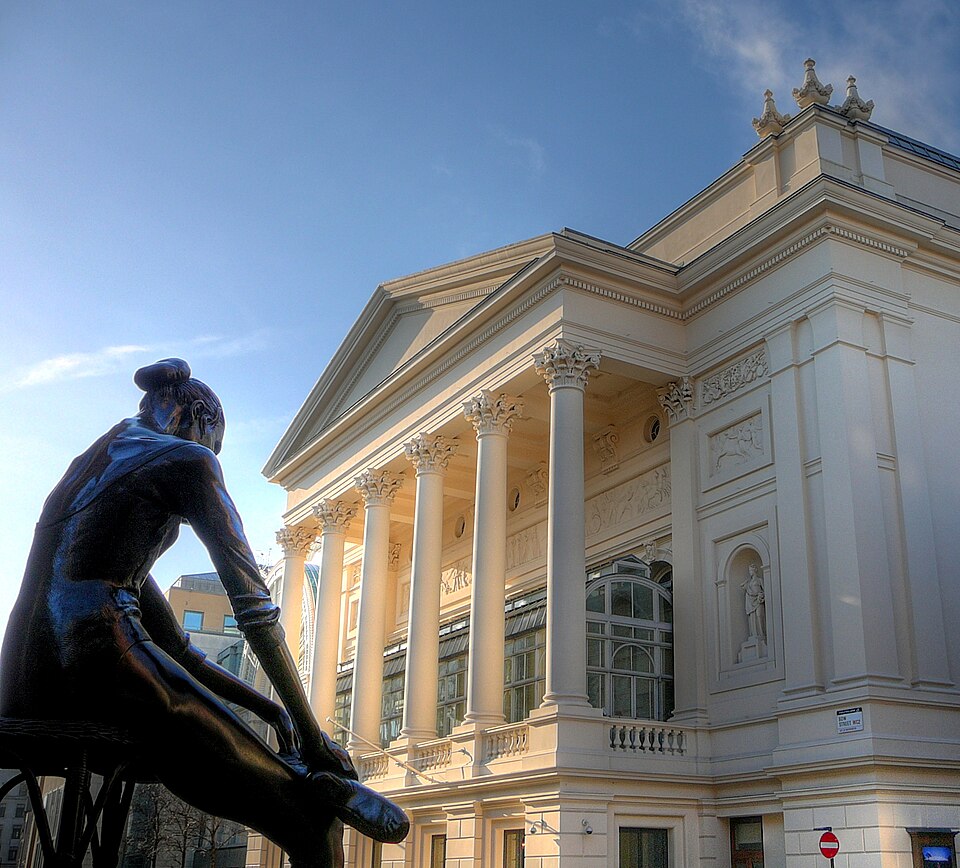
1732 - Royal Opera House / Covent Garden Theater (All Facts)
1740s / 1700s - Methodist Movement / Methodists / Methodism (All Facts)
Movement founded by John Wesley and led by John Wesley and Charles Wesley
1725 - 1803 - Patriot Whigs / Patriot Party (All Facts)
They opposed Robert Walpole, who suffered an election setback as a result of their strong opposition to the Prime Minister’s foreign policy