ISM Chapter 11 Notes
 Call Kai
 Learn
 Practice Test
 Spaced Repetition
 Match
 Flashcards
 Knowt Play
1/49

There's no tags or description
Looks like no tags are added yet.
50 Terms
Relational Database
type of database is organized into many tables with common data items (shared key fields) linking the tables to one another
Primary Key
unique identifier
Individual database
personal use
Databank or commercial databases
sell/buy information about various users or products
Distributed database
If all the data in a database is not physically located in one place, it would be a(n)…
LexisNexis
type of commercial database; offers news and information on legal news, public records, and business issues
Data warehouse
strategic use of a database
Batch Processing example
monthly auto loan or insurance payment
Real time or online process
credit card processing
Data Redundancy
same information in multiple files
Distributed Database
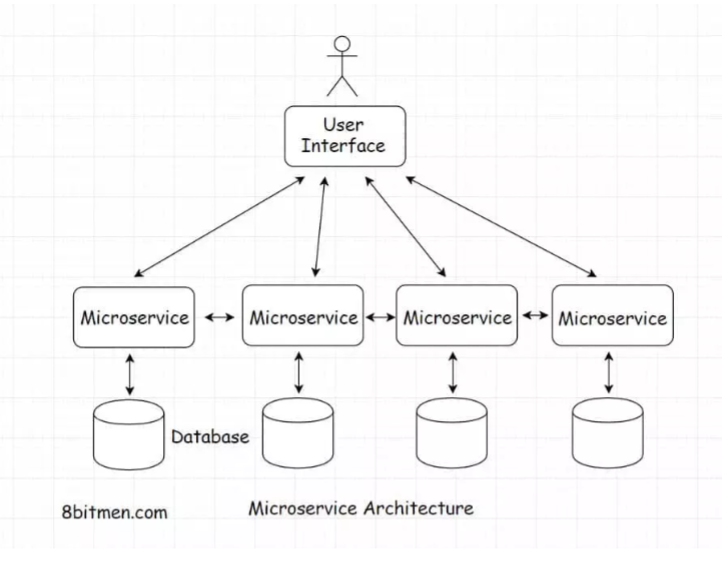
Spanner is an enterprise-grade, globally distributed, externally consistent database that offers unlimited scalability and industry-leading availability. It requires no maintenance windows and offers a familiar PostgreSQL interface. It combines the benefits of relational databases with the unmatched scalability and availability of non-relational databases. Gmail and YouTube use this database model
Hierarchical
Data structured in nodes organized like an upside-down tree; each parent node can have only one parent
Data dictionary
Contains a description of the structure of data
uses MySQL as one of its databases, but not the only one. Instagram also uses other storage technologies such as Cassandra, PostgreSQL, Memcache, and Redis for different purposes1. For example, Cassandra is used for storing user relationships, such as followers and followings1. PostgreSQL is used for storing metadata, such as comments, likes, and hashtags1. Memcache and Redis are used for caching and performance optimization
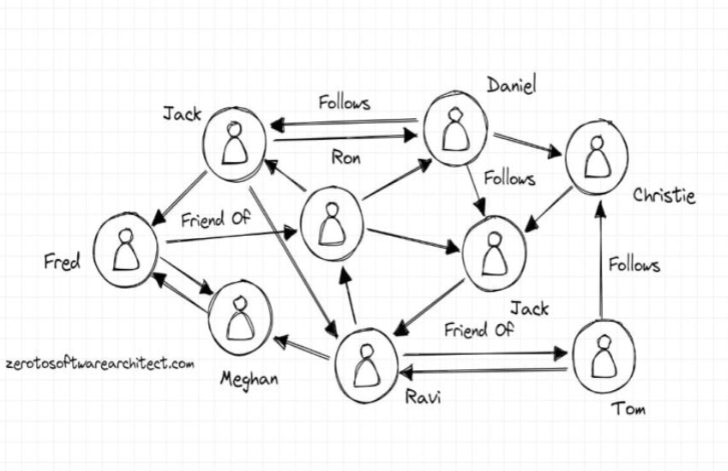
leverages a social graph to track and manage all the user events on the portal such as who liked whose post. Mutual friends. Which of your friends already ate at the restaurant you are visiting and so on. And this social graph is powered by MySQL
Cassandra
a NoSQL distributed database. By design, NoSQL databases are lightweight, open-source, non-relational, and largely distributed. Counted among their strengths are horizontal scalability, distributed architectures, and a flexible approach to schema definition
Data
facts or observations about people, places, things, and events
Physical view
focuses on the actual format and location of the data
Logical view
focuses on the meaning, content, and context of the data
Character
the most basic logical data element. It is a single letter, number, or special character, such as a punctuation mark, or a symbol, such as $
Field
group of related characters
attribute, entity
A data field represents an __ (description or characteristic) of some __ (person, place, thing, or object)
Record
a collection of related fields
Table
a collection of related records
Database
an integrated collection of logically related tables
Key field
each record in a table has at least one distinctive field
Batch processing
data is collected over several hours, days, or even weeks
Real-time processing aka online processing
occurs when data is processed at the same time the transaction occurs
Data redundancy
Many organizations have multiple files on the same subject or person. For example, a customer’s name and address could appear in different files within the sales department, billing department, and credit department
Data integrity
If one or more files are overlooked, problems will likely result. For example, a product ordered might be sent to the new address, but the bill might be sent to the old address
DBMS engine
provides a bridge between the logical view of the data and the physical view of the data
Data manipulation subsystem
provides tools for maintaining and analyzing data
Application generation subsystem
provides tools to create data entry forms and specialized programming languages that interface or work with common and widely used programming languages such as C++ or Visual Basic
Data administration subsystem
helps to manage the overall database, including maintaining security, providing disaster recovery support, and monitoring the overall performance of database operations
database administrators (DBAs)
Larger organizations typically employ highly trained computer specialists, called
Nodes
points connected like the branches of an upside-down tree
parent node, child nodes, one-to-many relationship
Each entry has one __, although a parent may have several __. This is sometimes described as a __
Network database
also has a hierarchical arrangement of nodes. However, each child node may have more than one parent node. This is sometimes described as a many-to-many relationship
Relational database
The most common type of organization is the __. In this structure, there are no access paths down a hierarchy
relation
a table and its data are called a
multidimensional databases, data cube
Whereas relational databases use tables consisting of rows and columns, __ extend this two-dimensional data model to include additional or multiple dimensions, sometimes called a __
Individual database
a collection of integrated files primarily used by just one person
Distributed database
Many times the data in a company is stored not in just one location but in several locations. It is made accessible through a variety of communications networks
Commercial database
generally an enormous database that an organization develops to cover particular subjects. It offers access to this database to the public or selected outside individuals for a fee
Object-oriented databases
store data, instructions, and unstructured data
Classes
general defintions
Objects
specific instances of a class that can contain both data and instructions to manipulate the data
Attributes
the data fields an object possesses
Methods
instructions for retrieving or manipulating attribute values
NoSQL
Object-oriented databases are part of a new category of databases known as…