Chapter 11 chaoter ijo123iewrufgb
 Call Kai
 Learn
 Practice Test
 Spaced Repetition
 Match
 Flashcards
 Knowt Play
1/43

There's no tags or description
Looks like no tags are added yet.
44 Terms
Gas IMF
weak
Liquid IMF
moderate
Solid IMF
strong
What is steam’s temperature?

What is water’s temperature?

What is ice’s temperature?

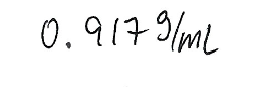
What is steam’s density?
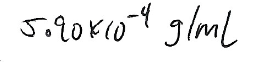
What is water’s density?

What is ice’s density?
What is steam’s molar volume?
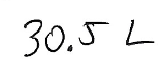
What is water’s molar volume?
Atypical behavior
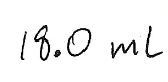
What is ice’s molar volume?
Atypical behavior

What states of matter are most alike to each other?
Solid and liquid compared to them with a gas
Liquids and solids both have particles close together → strong attractive forces as a result
What is the main difference between solids and liquids?
Freedom of movement for particles in each state
Liquids → enough E to overcome attractions btwn particles, move relative to each other
Solids: Not enough energy, by any temperature above 0K, there is still motion (vibration) in FIXED LOCATION (definite shape, volume)
Why are solids not compressible?
Solids too close, have fixed location
2 types of solids
Crystalline, Amorphous
Crystalline
Particle in a well-ordered 3D array (ex. NaCl)
Amorphous
Particles w/ no long-range order (ex. range)
How can scientists alter physical states of matter?
Change temperature or pressure
Types of forces within molecules
Primary forces, secondary forces
Primary forces
Bonds btwn. atoms
Large force over a small distance
Intramolecular forces
Harder to break
Break bonds → 2000 C
Coulumbs law lmao
Full charges w/ electrons and protons
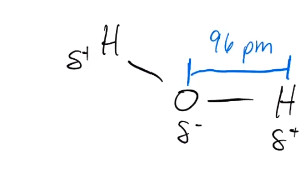
Secondary forces
Btwn molecules
Small force over large distance
Intermolecular forces
Easier to break
If you wanted to boil water → break intermolecular forces at 100 C
Coulumbs law
Attraction btwn. partial charges
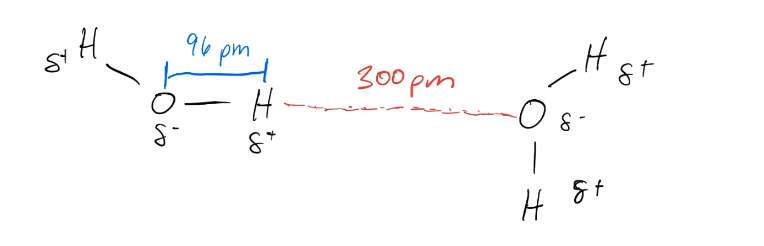
Intermolecular forces
The electrostatic attractive forces in all particles
What is state of matter for a compound at room T and P dependent on?
Strength of IMF and structure
Where does strength of IMF come from?
Interaction between charges (full, partial, temporary)
Full: ions
Partial: Dipoles
Temporary: nonpolar compounds
4 classes of IMFs (from relatively weak to strong forces)
(London/Van der Waals) Dispersion forces, Dipole-Dipole forces, Hydrogen bonding forces, Ion-dipole forces
(London/Van der Waals) Dispersion forces
(.05-20+ KJ/mol)
In allll molecules
Due to fluctuations in electron distribution in atom/compound
Shifts cause temporary dipole in atom/molecule, induce dipoles in neighobors
electrons doing the wave at 10^6 m/s :heartbrocken:

What is the magnitude of LOFs dependent on?
Polarizability, Structure
Can be used to predict stronger IMFs btwn nonpolar compounds + boiling points within families of similar compounds
Polarizability
How easily the electron can move in response to instantaneous dipole
Dependent on size of electron cloud
Larger clouds → Stronger LDF
Electrons held less tightly by nucleus, easier to move
LDF generally increase with MM (increased mass, larger clouds)
Boiling point also increases w/ MM
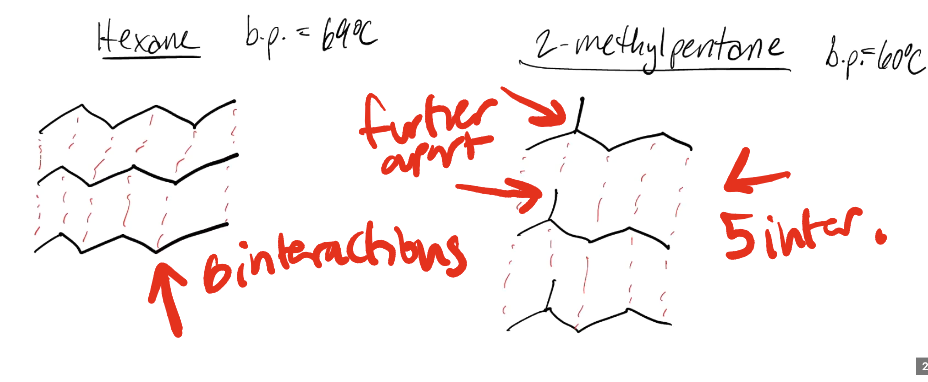
Structure effect on magnitude of LOF
Determines amount of surface area available for IMF interactions + how close molecules can get to each other
More SA + Closer interactions = stronger IMFs
Dipole-Dipole Forces
(3-20+ KJ/mol)
Present in molecules w/ permanent dipole
ex. polar molecules
Occurs due to presence of polar bonds and don’t cancel
Compounds with this dipole dipole have higher melting+boiling points compared to nonpolar compounds w/ LDFs w/ a similar mass

What to consider w/ 2 polar compounds with similar MM in determining strength of IMFs?
Consider structure+size of change of electronegativity
Compound less branching/higher EN: Stronger IMFs
ex. a tetrahedral structure keeps electrons further away from eachother compared to trig. planar

Miscibility
The ability for two liquids to mix w/o separating (like dissolves like)
Determined by polarity
ex. it’s not energetically favorable for water to give up its strong IMF for oil’s weaker IMF

Hydrogen bonding forces
(10-40 KJ/mol)
Special dipole-dipole, polar molecules that specifically have H-F, H-O, or H-N bonds
Stronger dip-dip because F, O, and N are small atoms w/ high EN
Small atoms allow for closer interactions btwn. dipoles
High EN leads to high change in EN and therefore larger partial charges
Only occur btwn. H bonded to F, O, N and the F, O, N on the neighboring molecule
What elements can create hydrogen bonding forces
H, F, O, and N
Ion-Dipole Forces
(30-100 K/J/mol)
Occur when soluble ionic compound w/ permanent charge is mixed w/ polar compound w/ dipole

Exceptions in IMF strength
LDF: increase w/ increasing MM, can become as strong (or even stronger) than other IMF
How to rank substances by boiling point?
Check MM
Draw lewis structure to determine structure
Effect of IMF on liquids
Results in surface tension and viscosity
Surface tension
Tendency of liquid to minimize their surface area (creates skin that resists objects on the surface)
Surface molecules only interact w/ 4 neighboring molecules compared to interior molecules that interact w/ 6 neighboring molecules
Surface molecules w/ higher P.E.
Measured as energy required to increase SA by a unit amount
Decreases w/ decreasing IMF
Viscosity
The resistance of a liquid to flow (ex. honey is harder to pull through)
Measured in Poise (P), how fast a mass can move through an area
Increases w/ increasing IMF
Increase w/ longer molecules, increases LDF (more bonds to be created)
Decreases w/ temperature, less energy to overcome IMF
Capillary Action
ability of a liquid to flow against gravity up a narrow tube
dependent on cohesive+adhesive forces
Adhesive forces > cohesive forces, liquid climbs the tube’s surface
Liquid will rise until capillary action forces balance w/ gravity
Cohesive forces cause interior to also climb up the tube as well
Cohesive forces
Attraction btwn. liquid molecules
Adhesive forces
Attraction between liquid molecules and the tube’s surface, causing liquid to spread out over the tube surface