BIOL 1410 L18: Male Reproductive System
 Call Kai
 Learn
 Practice Test
 Spaced Repetition
 Match
 Flashcards
 Knowt Play
1/34

There's no tags or description
Looks like no tags are added yet.
35 Terms
What do the male and female reproductive system consist of? (3)
Gonads
Ducts
Accessory glands
Gonads
Produce gametes; male - testes; female - ovaries
Ducts
Transport and store gametes
Accessory glands
Produce secretions that lubricate gamete passageways and support gametes; nutrients and buffers
Scrotum
A sac-like structure containing the testes; hangs outside for cooler temperature
Scrotum layers (2)
Consists of skin and connective tissue
Tunica albuginea
Tunica vaginalis
Tunica albuginea
Comprises the inner capsule of the scrotum; extends toward the inside of the testicle dividing it into 250-300 lobules

Each lobule contains (2)
Seminiferous tubules
Leydig cells (also called interstitial cells)

Tunica vaginalis
The outer covering of the scrotum; a serous membrane
Seminiferous tubules
Site of sperm production; form the rete testis

Sperm production process
Spermatogenesis
Rete testis
A net of seminiferous tubules (from each lobule) that the sperm must pass through when they exit the testes

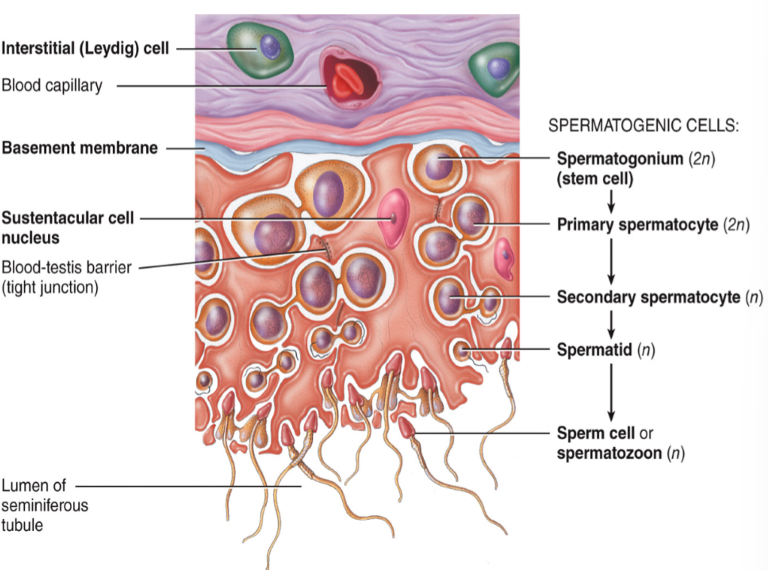
Spermatogenesis process
Spermatogonia (2n cells) → mitosis
1x Primary Spermatocyte (2n cell) → meiosis I
2x Secondary Spermatocyte (n cells) → meiosis II
4x Spermatids (n cells) → spermiogenesis
4x Spermatozoa (n cells)
Produce 4 haploid spermatozoa from 1 diploid primary spermatocyte
Spermiogenesis
Spermatids develop an acrosome and a flagellum (“tool kit” and tail)
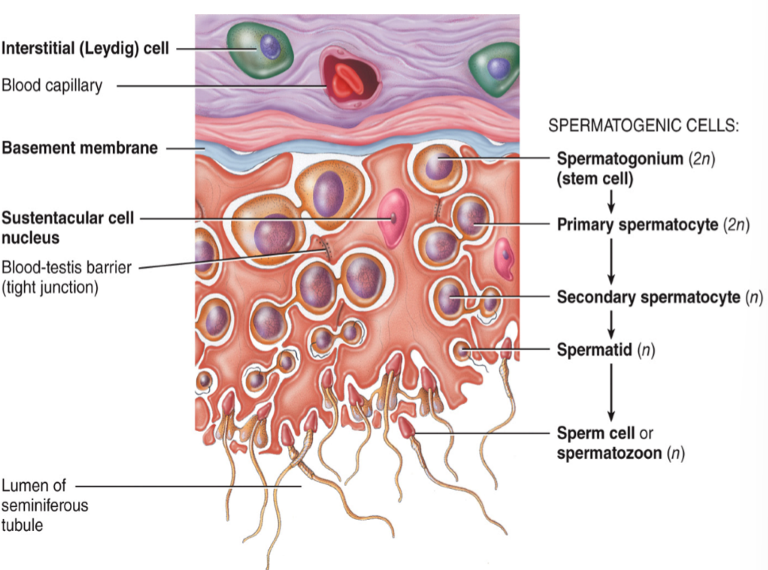
Leydig cells (interstitial cells)
Located in the connective tissue (endocrine tissue) that surrounds the seminiferous tubules and predominantly secrete testosterone
Testosterone
Essential for development of male sex characteristics and spermatogenesis
Walls of the seminiferous tubules contain (2)
Germ cells
Seratoli cells (sustentacular cell)
Germ cells
Gametes in various stages of development

Seratoli cells (sustentacular cell) location
Located between germ cells; extend from the basement membrane to the lumen of the tubule

Blood-testis barrier
Formed from the tight junctions of seratoli cells (sustentacular cell) that protect the sperm from blood components such as alcohol, drugs, etc.

Seratoli cells (sustentacular cell) functions (3)
protect sperm from blood components
support and nourish developing sperm cells
regulate sperm production
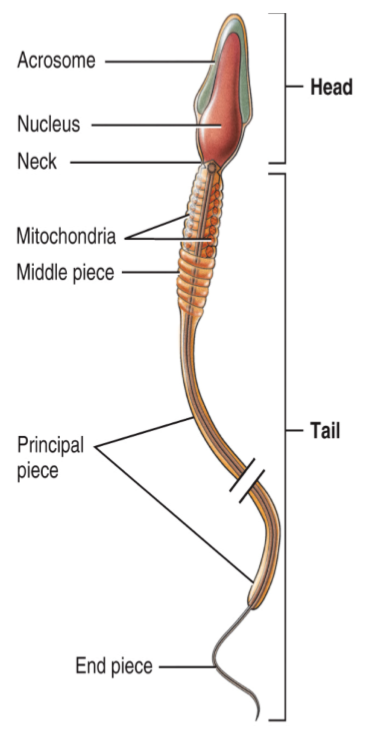
Sperm consists of (3)
Head
Body
Tail
Head of sperm (2)
contains the haploid sperm cell nucleus (23 chromosomes)
contains the acrosome

Acrosome
Contains enzymes that assist in penetrations of the egg (membrane) during fertilization; “tool kit”

Body of sperm (2)
mid-piece of the sperm
contains a large number of mitochondria - produce large quantities of ATP needed for sperm to swim to the egg

Tail of sperm (2)
flagellum formed from microtubules
propels the sperm forward in a whip-like fashion

Ducts where sperm move through when ejaculated (6)
Rete testis
Epididymis
Vas deferens (ductus deferens)
Ejaculatory duct
Urethra
Penis
Epididymis
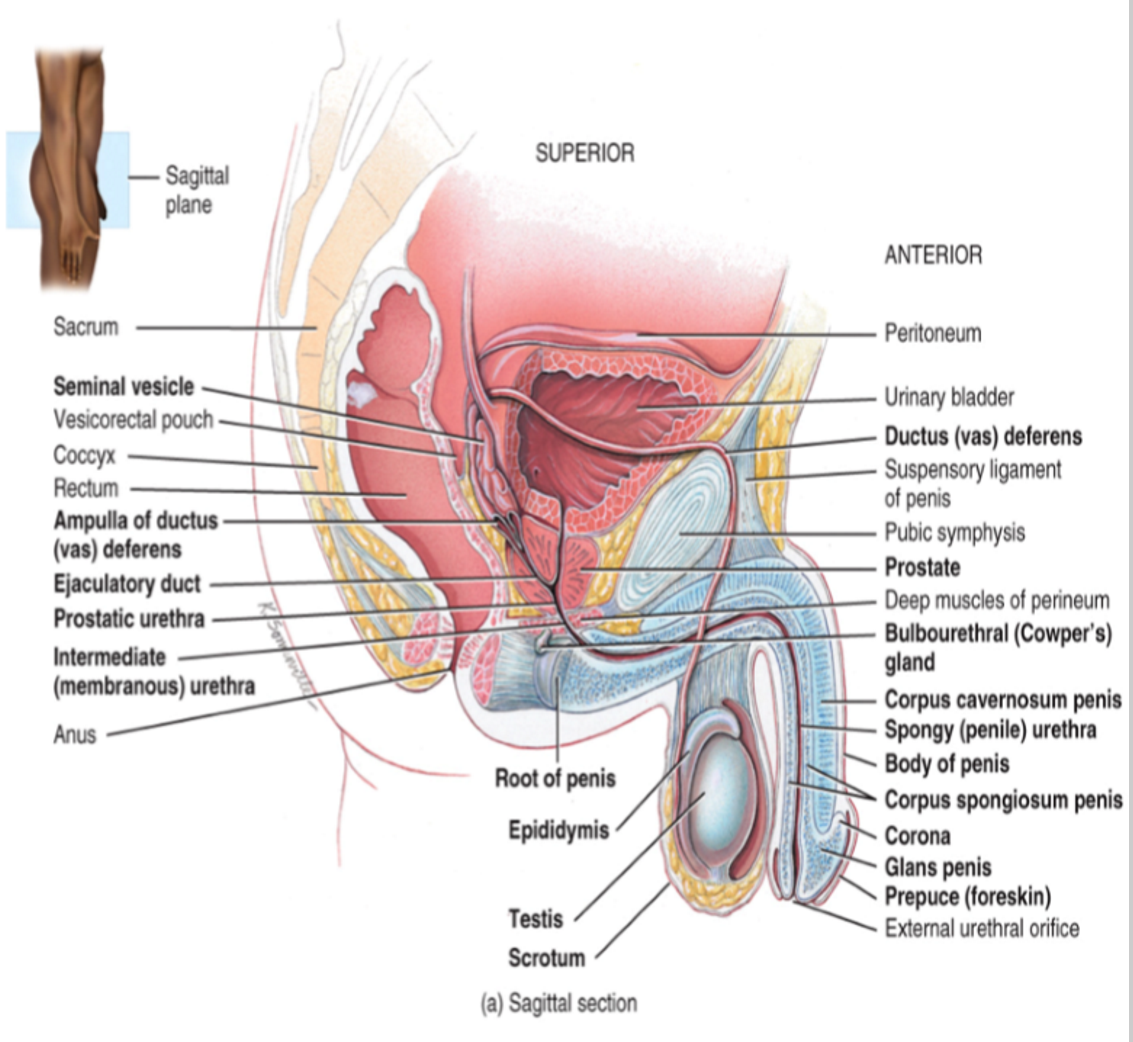
Site of sperm maturation; located at the poster, superior and lateral border of the testis

Vas Deferens (Ductus deferens)
Enters into the pelvic cavity and loops over the posterior surface of the bladder

Vasectomy
Severs and ties the vas deferens in order to prohibit sperm transport; sperm continue to be produced but are broken down by macrophages in the epididymis
Ejaculatory duct
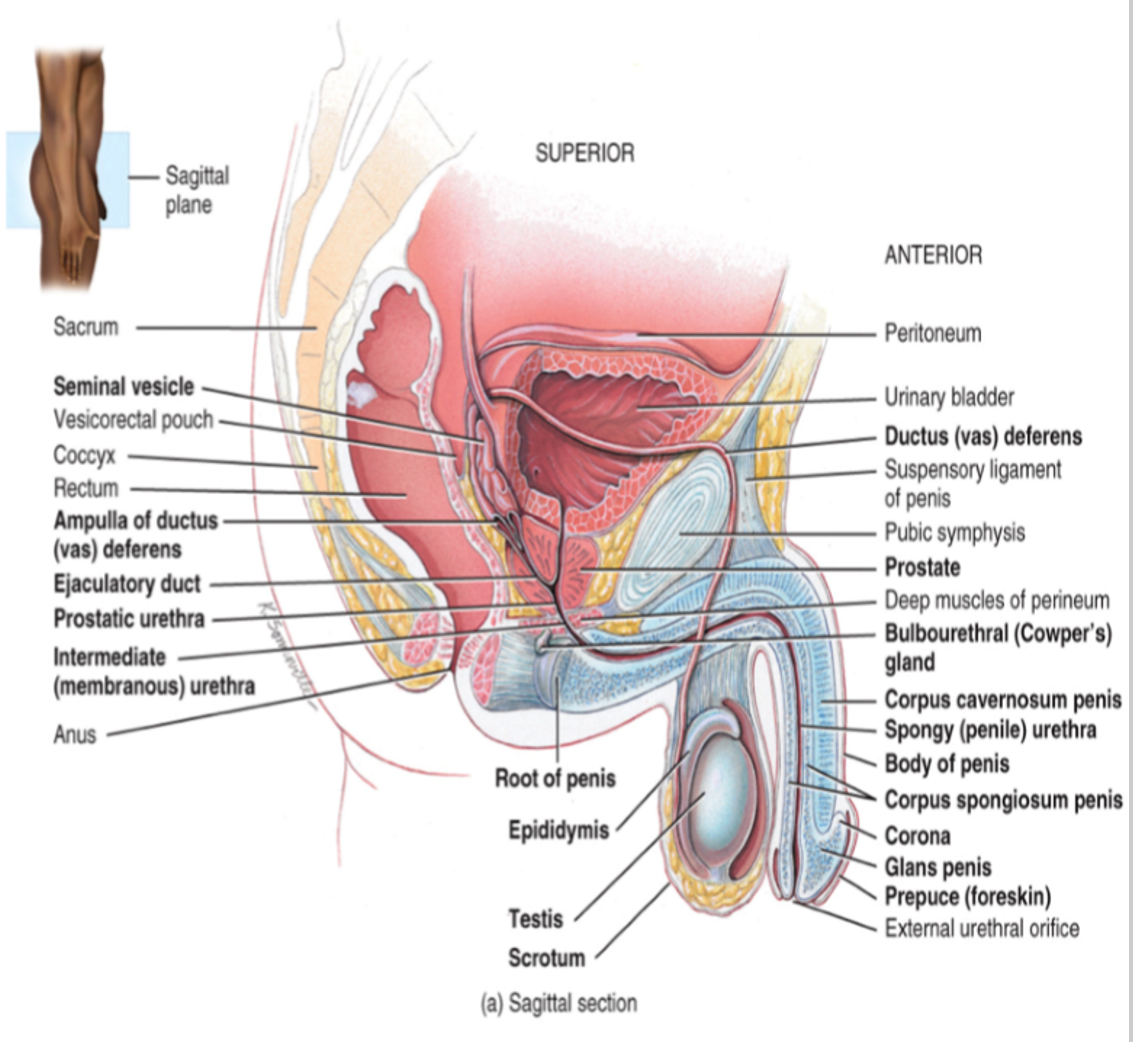
Formed from the union of the vas deferens and the duct from the seminal vesicle (produces a component of semen)
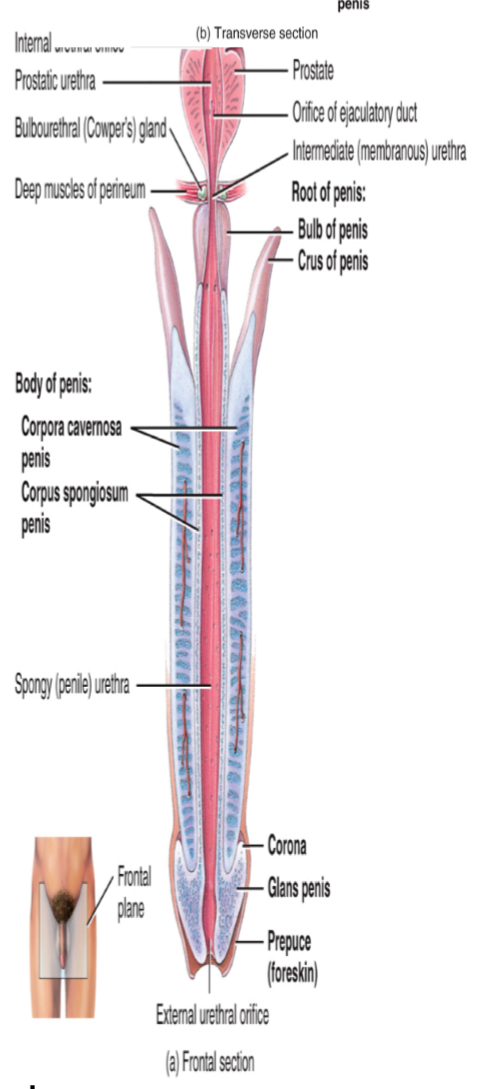
Urethra
Functions to transport both sperm and urine and opens into the glans penis; contains three segments
Three segments of the urethra and where they pass through
Prostatic portion → passes through the prostate gland
Membranous portion → passes through the urogenital diaphragm
Penile portion → passes through the penis
Penis
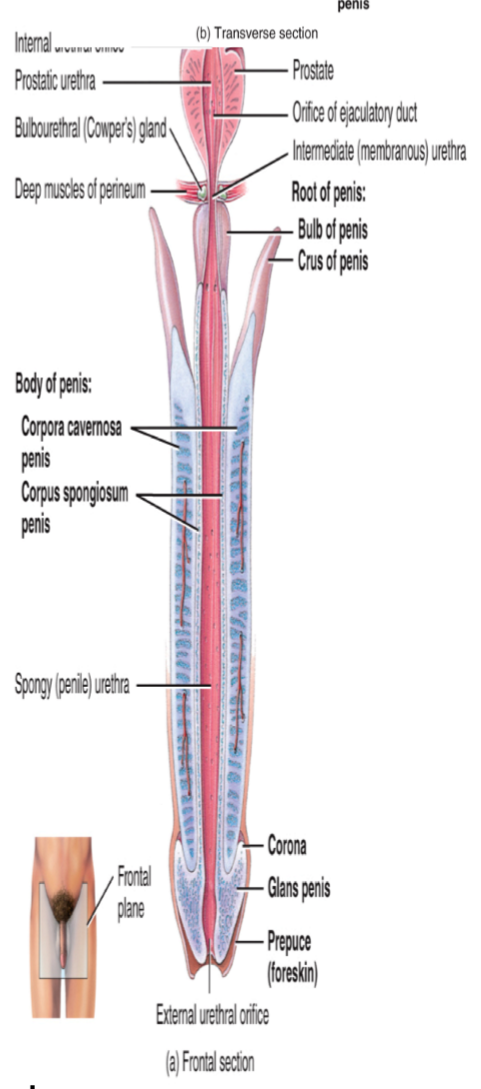
Contains a root, shaft and enlarged tip called the glans penis; erectile tissue
Erectile tissue consists of what? (3)
2 corpora cavernosa
1 corpus spongiosum - contains the glans penis