Intake and Output (Exam 3)
 Call Kai
 Learn
 Practice Test
 Spaced Repetition
 Match
 Flashcards
 Knowt Play
1/35

There's no tags or description
Looks like no tags are added yet.
36 Terms
What does I&O stand for?
Intake and Output.
What are examples of fluid intake?
Water, juice, broth, Jello, and IV fluids.
What are examples of fluid output?
Urine, vomit, stool, and drainage.
How do you calculate net fluid balance?
Total intake minus total output.
What does a positive fluid balance mean?
Intake is greater than output.
What does a negative fluid balance mean?
Output is greater than intake.
A patient drinks 550 mL orange juice, 1,000 mL water, 300 mL broth, and 150 mL Jello. What is the total oral intake?
2,000 mL.
A patient receives normal saline at 75 mL/hr for 24 hours. How much IV fluid do they receive?
1,800 mL
A patient has 400 mL emesis, 800 mL urine, and 250 mL colostomy output. What is total output?
1,450 mL
Using the information in the previous three questions, what is the patient's total intake?
3,800 mL before subtracting the emesis; oral intake is 2,000 mL and IV intake is 1,800 mL.
What is the net fluid balance for that patient?
+2,350 mL (3,800 mL intake minus 1,450 mL output).
Why is monitoring I&O important?
It helps evaluate fluid balance and identify fluid volume deficits or excesses.
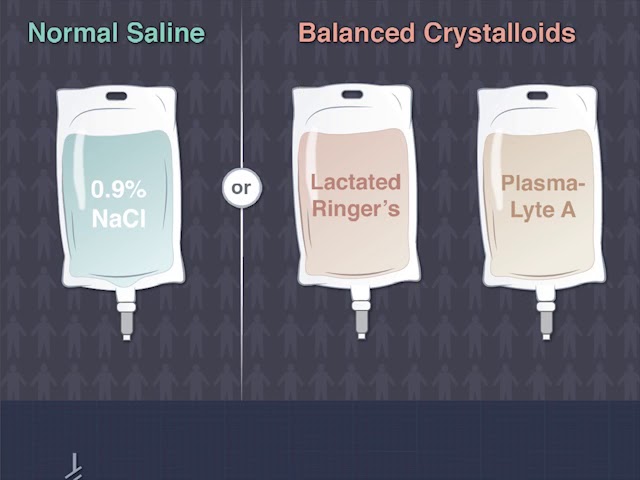
What are examples of crystalloid IV fluids?
Lactated Ringer's, 0.9% Normal Saline, and D5W.

According to the lecture, how often should IV tubing for crystalloids be changed?
The slide notes a change from every 96 hours to every 7 days. Follow current facility policy.
How often should intermittent infusion tubing be changed according to the lecture?
Every 24 hours
Why do intermittent infusions have an increased risk of contamination?
They involve repeated connections and disconnections.
How often should blood administration tubing be changed according to the lecture?
Every 4 hours
How often should lipid tubing be changed according to the lecture?
Every 24 hours.

What is the proper progression when preparing an IV site?
Distal to proximal.
What is the recommended insertion angle for IV insertion in the lecture?
10–30 degrees.

What is phlebitis?
Inflammation of the vein associated with an IV.
What are signs of phlebitis?
Redness, warmth, pain, and tenderness along the vein.

What is infiltration?
Accidental leakage of a nonvesicant IV solution into surrounding tissue.
What are signs of infiltration?
Swelling, coolness, pallor, discomfort, and slowed infusion.

What is extravasation?
Leakage of a vesicant medication into surrounding tissue, potentially causing tissue damage.
What is an important difference between infiltration and extravasation?
Infiltration involves nonvesicant fluid; extravasation involves a vesicant medication that can damage tissue.
What are the four types of blood products discussed in the lecture?
Whole blood, red blood cells, plasma, and platelets.
What does whole blood contain?
Red blood cells, white blood cells, and platelets.
What is the purpose of a red blood cell transfusion?
Provides hemoglobin that carries oxygen throughout the body.
What is plasma?
The liquid portion of blood that contains proteins such as albumin.
What is the purpose of a platelet transfusion?
Provides platelets that help form clots and decrease bleeding.

What is a hemolytic transfusion reaction?
A serious reaction in which transfused red blood cells are destroyed.
What does BLOOD help you remember about a hemolytic reaction?
Back pain, low blood pressure, coldness, increased heart rate, and dark urine.
. What are other possible signs of a transfusion reaction?
Hives and fever
What is the FIRST nursing action if a transfusion reaction is suspected?
Stop the blood transfusion immediately.
After stopping a suspected transfusion reaction, what should the nurse do?
Maintain IV access with normal saline using new tubing, notify the provider and blood bank, and follow facility transfusion-reaction protocol.